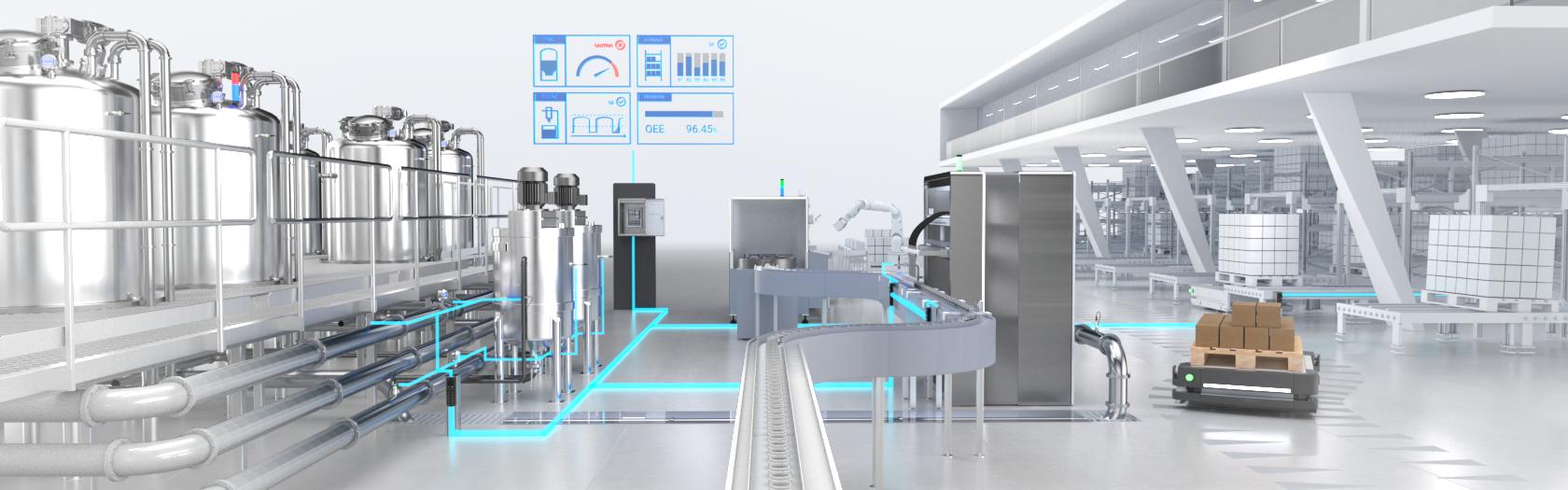
IO-Link Technology
Your gateway to the smart factory.
With IO-Link technology, functions integrated directly into the sensor can be easily parametrized. Sensors are ready to use and optimally set for the relevant application. IO-Link also enables a wide range of additional information to be transferred directly from the sensor to the OT world or the IT world, delivering more effective systems — your gateway to the digital factory.
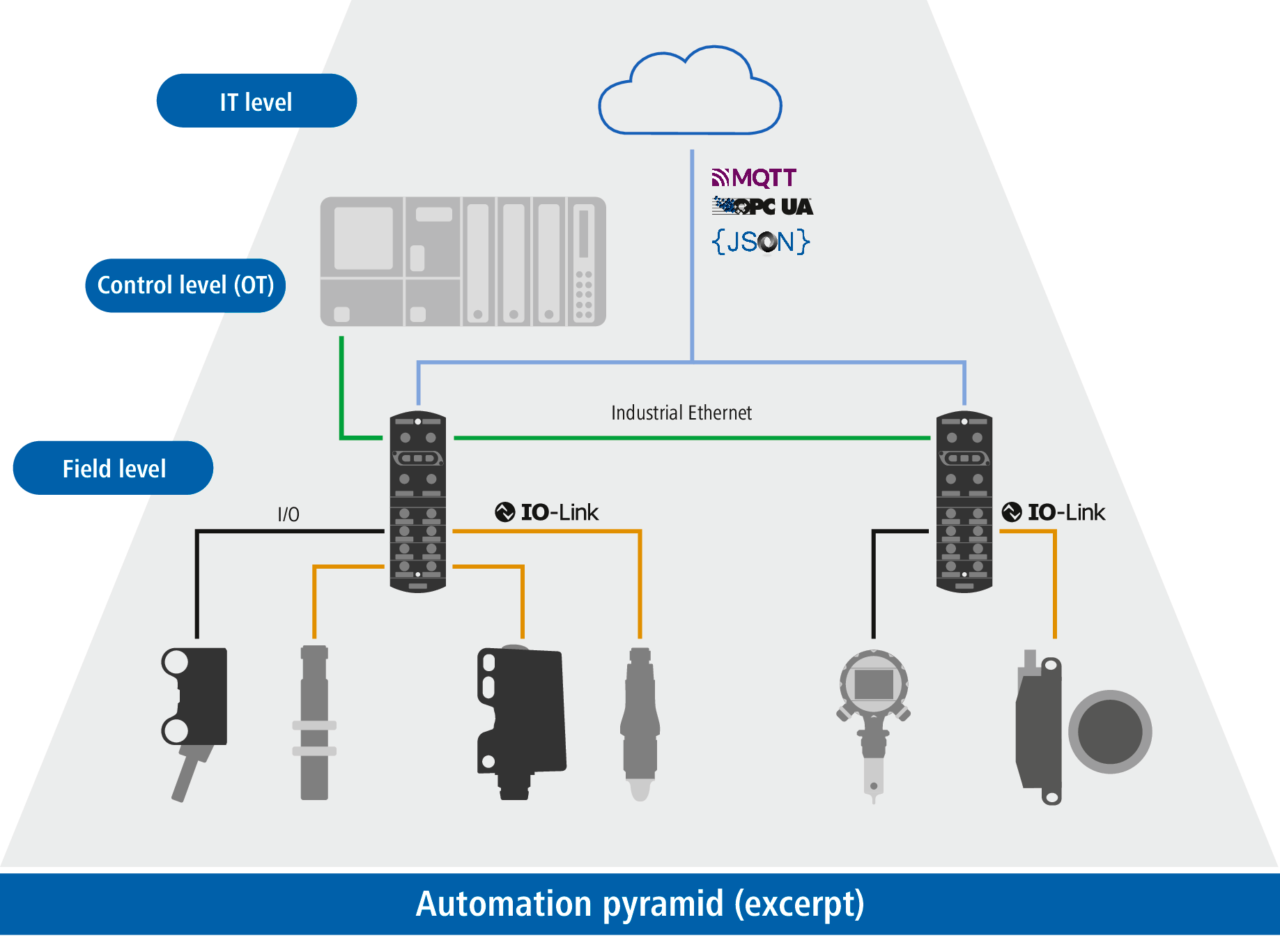
IO-Link is a manufacturer-independent digital communication protocol. It enables bidirectional point-to-point communication for process data exchange, parameters for configuration, and event and diagnostic data for fault or additional information feedback. Every IO-Link connection is established between an IO-Link master and an IO-Link device (actuator or sensor). These devices are connected to the IO-Link master via unshielded 3-pin standard M8/12 cables. IO-Link is available for a broad range of sensor technologies and can also be integrated into small, miniature sensors.
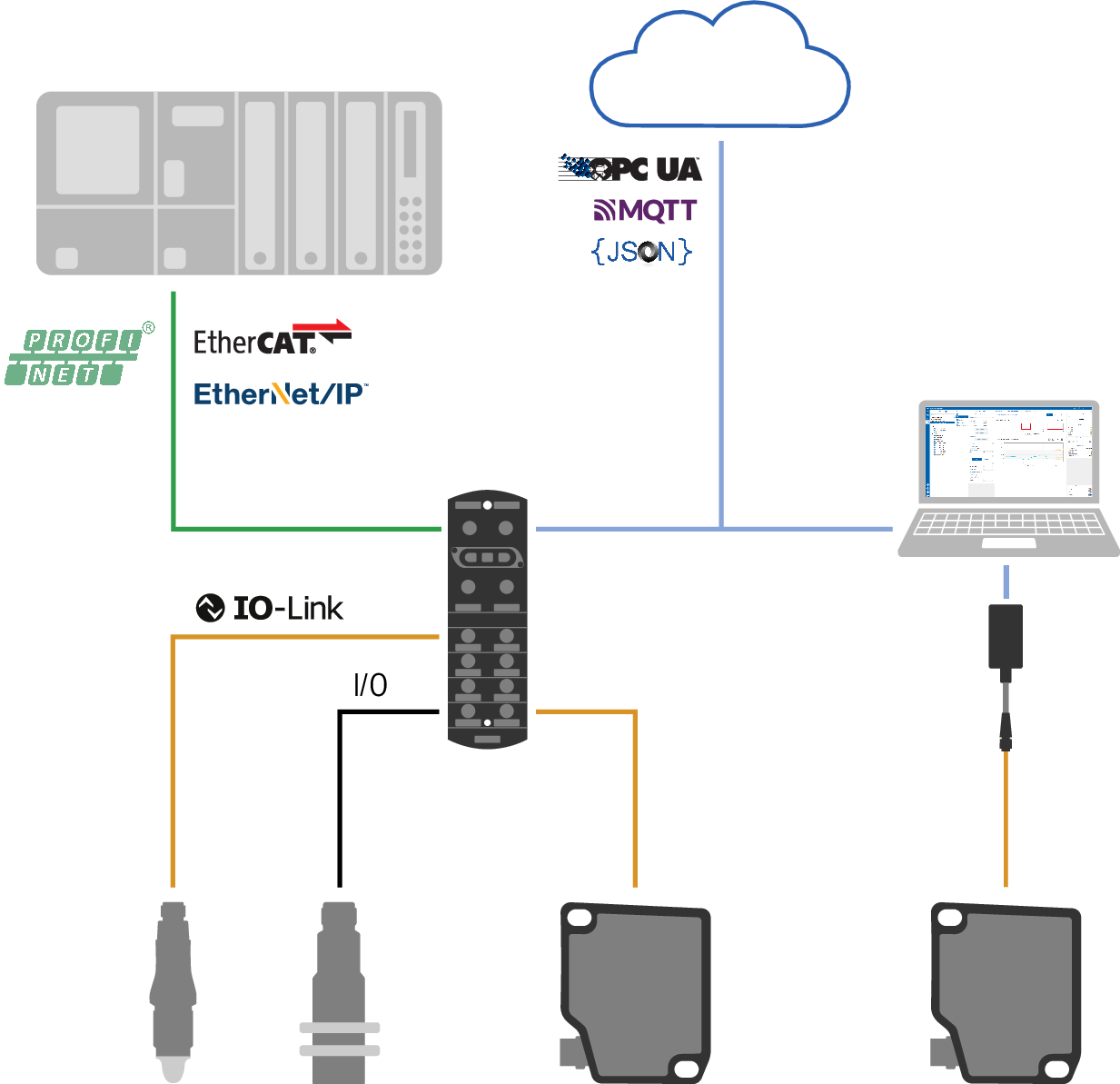
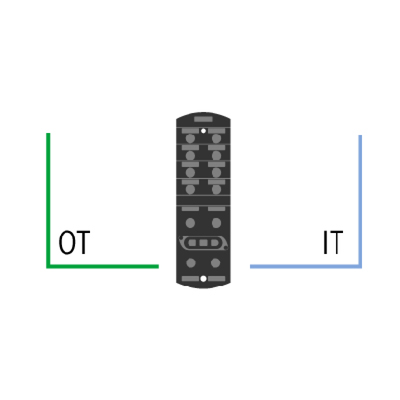
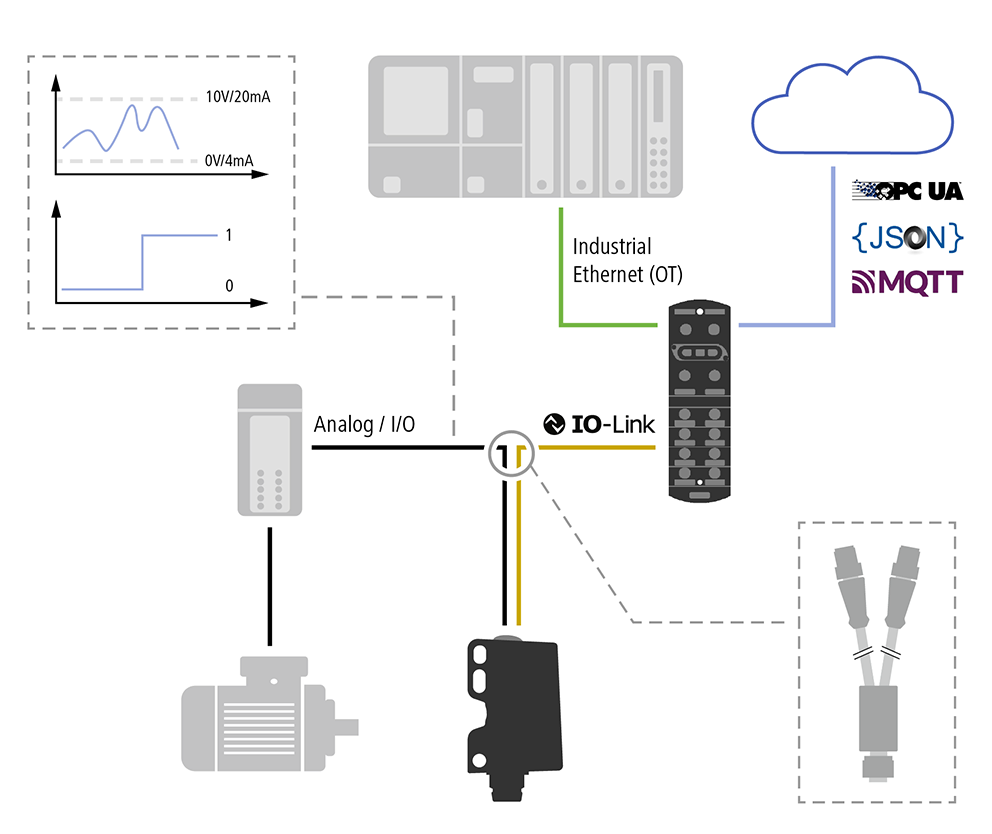
IO-Link masters typically connect to 8 IO-Link devices. The connection to the controller is established via industrial Ethernet protocols (operational technology - OT). In addition, various IT protocols such as OPC UA, MQTT and JSON REST are also supported over the same network line. This allows maintenance or management to access sensor data without affecting the speed or reliability of OT.
Easy commissioning and quick sensor replacement
Diagnostic data for status monitoring, enabling optimized processes
Lossless measurement value transmission thanks to digital communication
More sensor information for reliable control of systems and machines
Precise parametrization of sensor functions
Efficient engineering with PC-based sensor tools
An IO-Link connection consists of an IO-Link master and an IO-Link device. The IO-Link master acts as a gateway, translating IO-Link communication into all common Industrial Ethernet (OT) and related IT protocols.
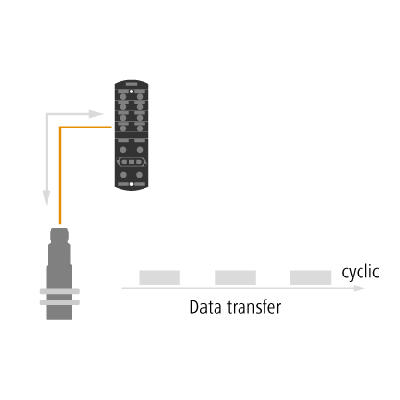
Cyclic IO-Link communication (process data) consists of measurement values and status information for controlling and regulating the machine. Most of this is transferred to the PLC via fieldbuses.
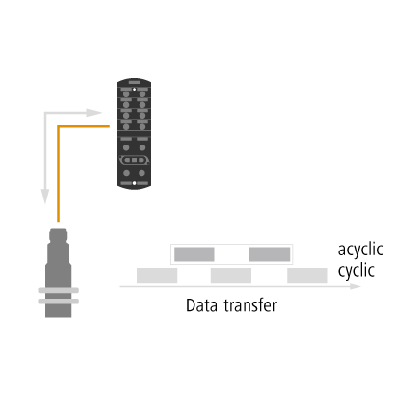
Acyclic communication consists of parameters for configuring devices or information for diagnostics. It mainly serves to optimize processes by communicating with IT systems.
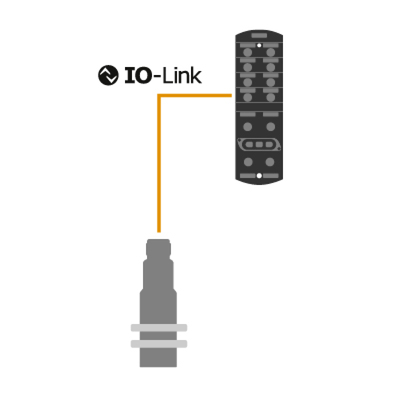
As described in the What is IO-Link? section, IO-Link masters can also read and output switching signals. All IO-Link devices can also be used by default as switching devices. This always guarantees backward compatibility.
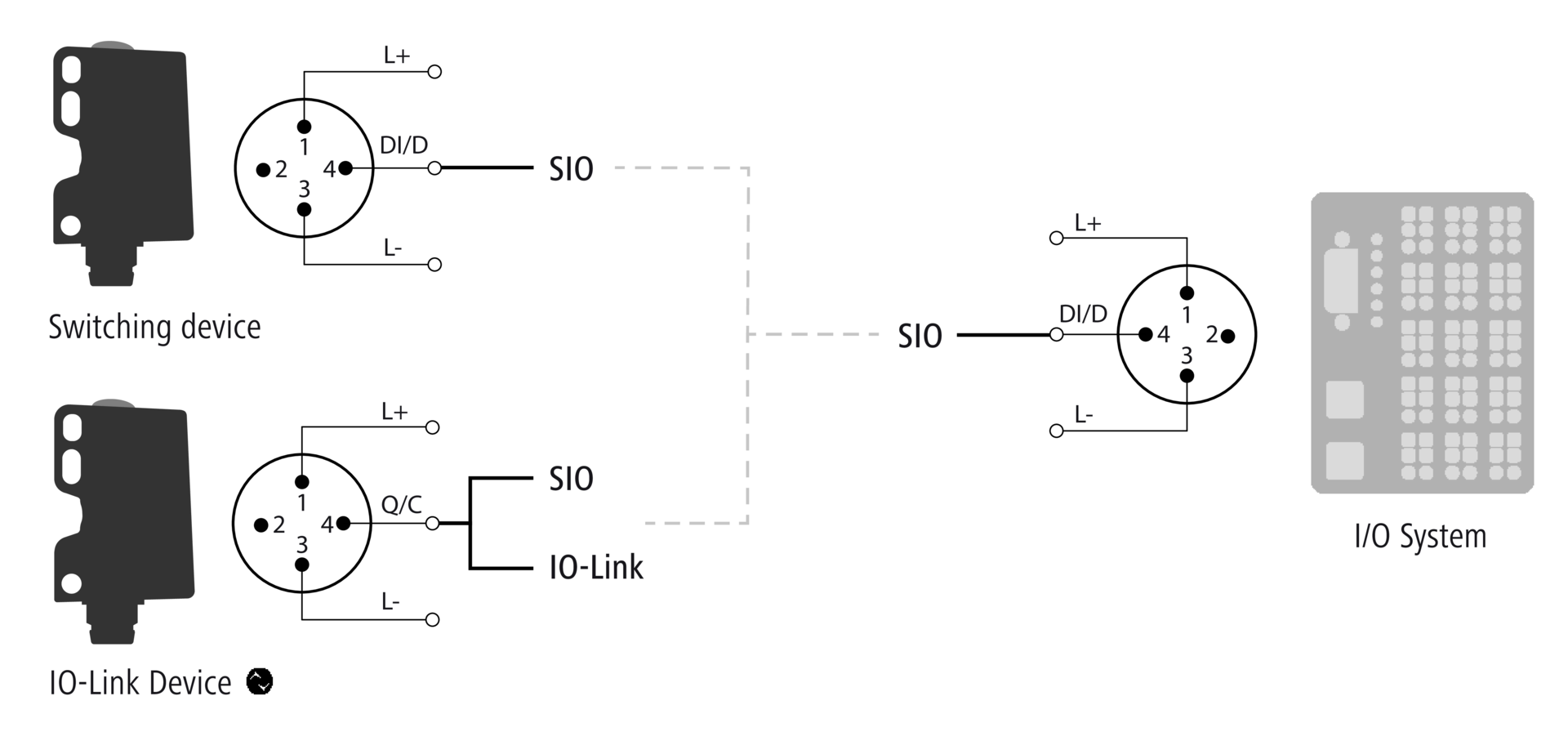
All IO-Link devices can also be used by default as switching devices in SIO mode (standard input/output). This means they can be connected to conventional I/O systems.
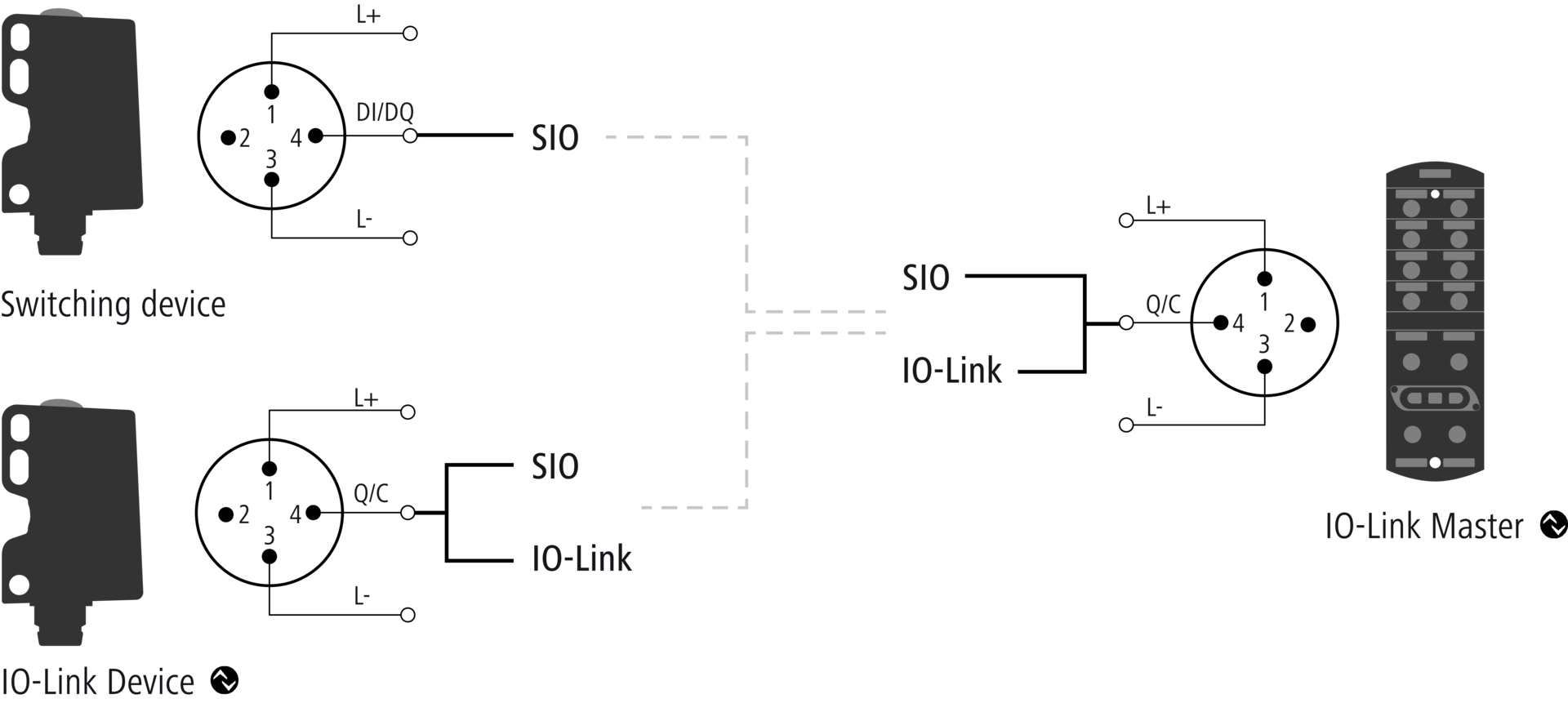
All IO-Link masters can also be used by default as inputs and outputs for switching signals (SIO mode). This makes it possible to operate conventional devices without an IO-Link interface on an IO-Link master.
"IO-Link dual channel" is a term coined by Baumer, referring to sensors that have additional switching or analog outputs alongside IO-Link communication. IO-Link dual channel makes it possible to operate very fast processes or existing analog interfaces while at the same time benefiting from the advantages of IO-Link technology (e.g. parametrization, condition monitoring, etc.).
The IO-Link Community brings together more than 500 members worldwide. These members define and continuously develop the IO-Link standard. The latest standards include IO-Link Wireless and IO-Link Safety. Baumer is an active member not only of the Community, but also of its Steering Committee.
The IO-Link Community also operates the IODD finder. IODD (Input Output Device Description) is a file used to describe IO-Link devices. PC-based tools such as Baumer Sensor Suite can use this file to interpret and display IO-Link data independently of the manufacturer.
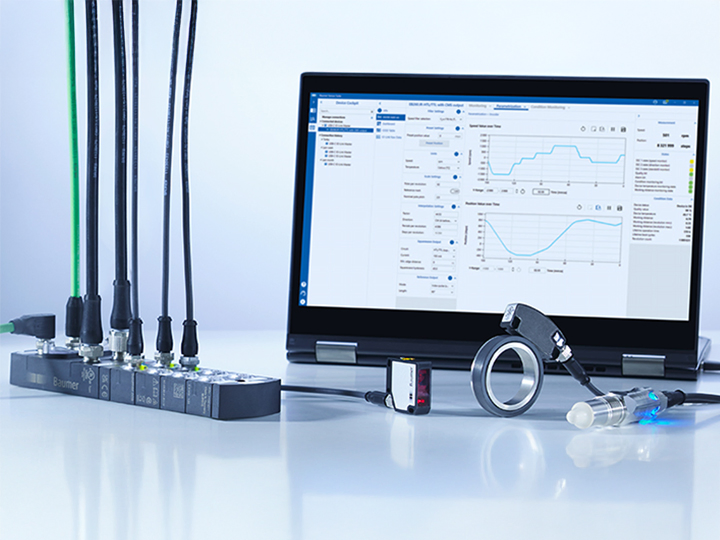
The Best Choice for IO-Link Sensor Solutions
- A broad technology range for different applications
- Numerous sensor functions that optimize system and machine performance
- Valuable additional data for condition monitoring
- Plug-and-play communication (Operational Technology OT and IT)
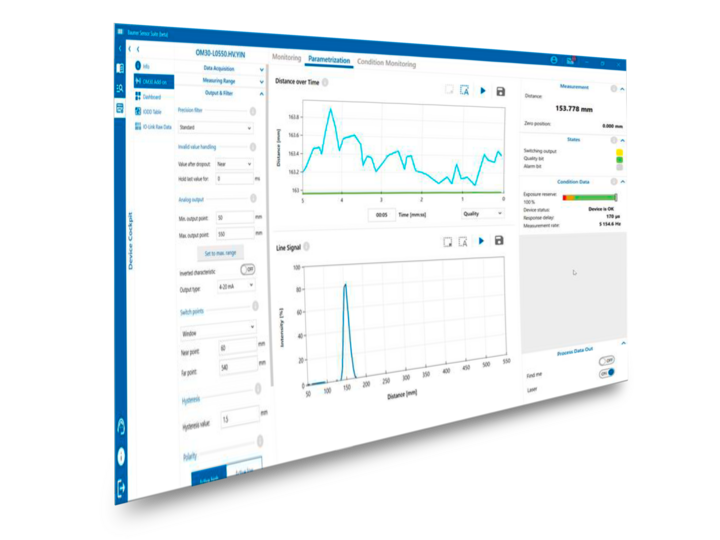
Baumer Sensor Suite
- Evaluation, parametrization and use of smart sensor solutions with IO-Link
- Understanding and using the full potential of IO-Link and Baumer CANopen devices
- Visualization of functions from different sensor manufacturers
- Easy-to-use PC software with a clean design and useful additional information
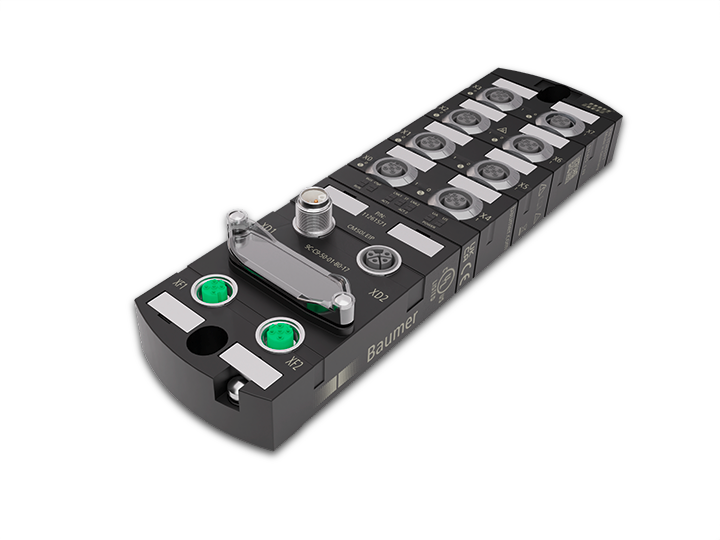
IO-Link Master
Easy Sensor Connection
- Connecting IO-Link sensors and actuators to the controller
- Data supplier for higher-level IT systems
- Parametrization via the user-friendly Baumer Sensor Suite
- Maximum performance for all IO-Link sensors and actuators