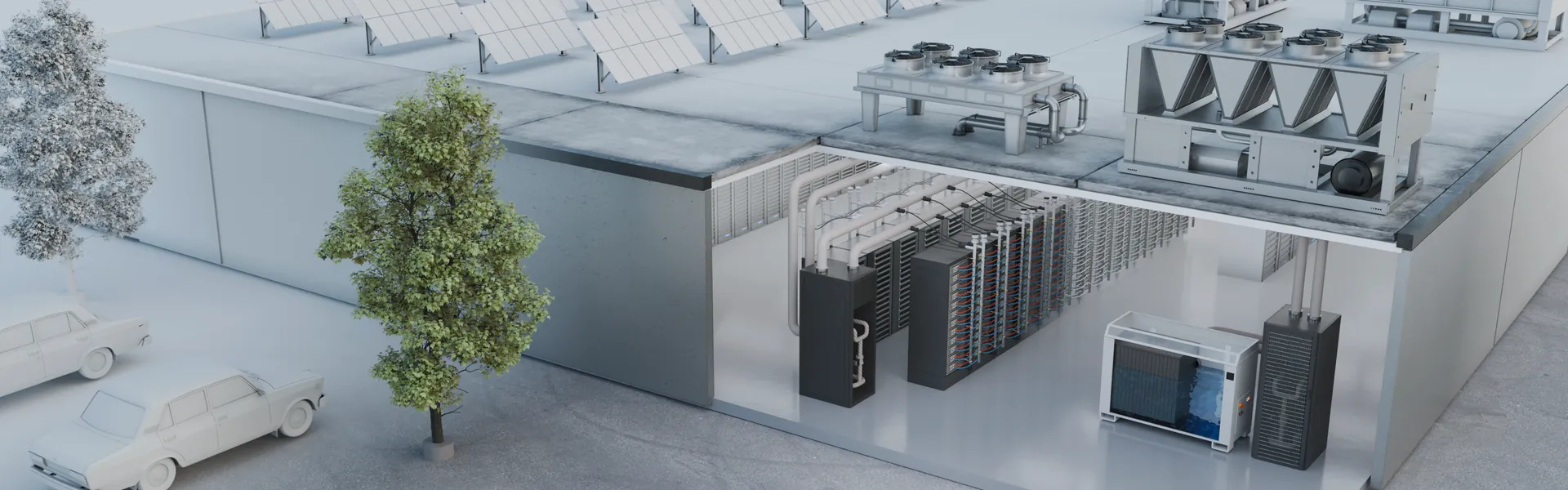
Sensor Solutions for Liquid Cooling in Data Centers
Sensor solutions for higher reliability, efficiency and system protection in data center liquid cooling systems.
Baumer Smart Sensor Solutions are specifically designed to meet the requirements of liquid cooling circuits in modern data centers and cover all relevant parameters. Flow monitoring sensors ensure reliable control of flow rates in liquid circuits, while precise temperature sensors enable continuous monitoring of critical temperature ranges. In addition, pressure sensors ensure stable regulation of hydraulic systems, level sensors provide safe monitoring of reservoirs and tanks, and conductivity sensors check fluid quality.
Thanks to the comprehensive sensor portfolio, all liquid cooling processes in data centers can be monitored transparently and controlled efficiently. Our solutions are primarily used in direct-to-chip and immersion cooling applications.
The combination of precise measurement technology and high system integration creates the conditions required for maximum processing power, optimized energy efficiency and the sustainable use of cooling technologies in AI computing environments.
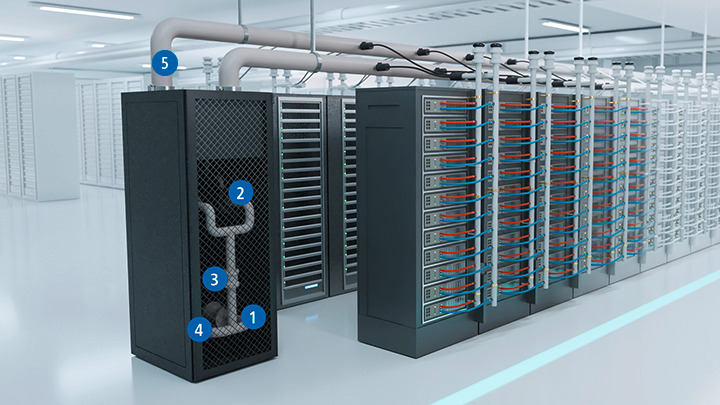
Direct-to-Chip (D2C) cooling is a liquid cooling technology in which the coolant is brought into the most efficient possible contact with thermally critical components such as CPUs and GPUs via cold plates. Removing heat directly at its source delivers much higher efficiency compared to air-cooled solutions.
Inlet and outlet temperatures indicate the efficiency of the cooling system. A drop in this efficiency points to problems within the system and negatively affects computing performance. Temperature monitoring enables optimum adjustments, prevents damage, increases energy efficiency and secures high-performance AI computing.
Monitoring coolant pressure ensures cooling performance. Changes in differential pressure indicate leaks, clogging or filter/pump problems. Real-time monitoring via pressure sensors enables early maintenance and helps prevent failures.
Flow rate directly affects cooling performance. Monitoring with flow sensors ensures adequate cooling, detects problems, and optimizes efficiency and energy consumption.
Coolant quality directly affects heat transfer. Conductivity sensors monitor purity and can detect contaminants that could lead to corrosion, deposits or leaks.
Air and gas bubbles in the cooling circuit affect the efficiency of the entire cooling system and can lead to cavitation and pump failure. The PAD20 bubble sensor detects even the smallest air and gas bubbles quickly and reliably, helping prevent costly, maintenance-intensive downtime.
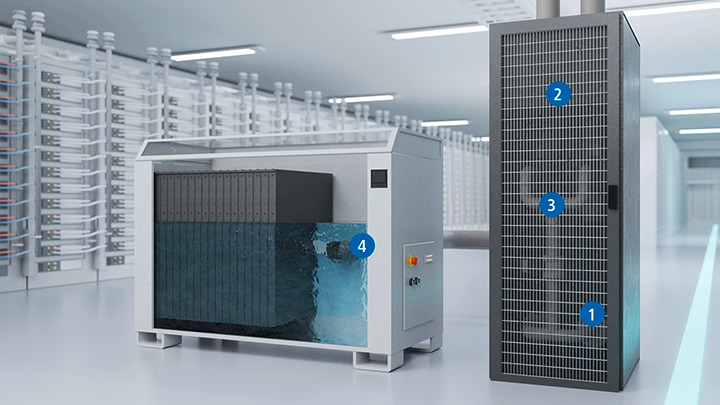
Immersion cooling is an advanced cooling method in which IT hardware is fully submerged in a dielectric fluid. Direct heat transfer enables highly efficient heat dissipation, significantly reduced energy consumption and increased power density. Both single-phase and two-phase systems are used for this purpose.
The inlet and outlet temperatures of the coolant directly indicate the efficiency of the cooling system. Changes in the temperature difference point to problems or an increasing heat load. Continuous temperature measurement allows the system to be optimized and enables energy savings.
Monitoring coolant pressure with sensors at the inlet and outlet ensures effective cooling. Changes in differential pressure indicate leaks, filter clogging or pump failures. Real-time data enables proactive maintenance and helps prevent system failures.
Flow rate determines how efficiently heat is removed. Monitoring this value with flow sensors ensures adequate cooling performance, prevents failures and optimizes energy consumption and system operation.
In immersion cooling, level monitoring of the dielectric coolant is critical, since all components must remain fully submerged in the fluid. This monitoring prevents overflow, detects low levels or leaks, and thereby protects against overheating and system failures.
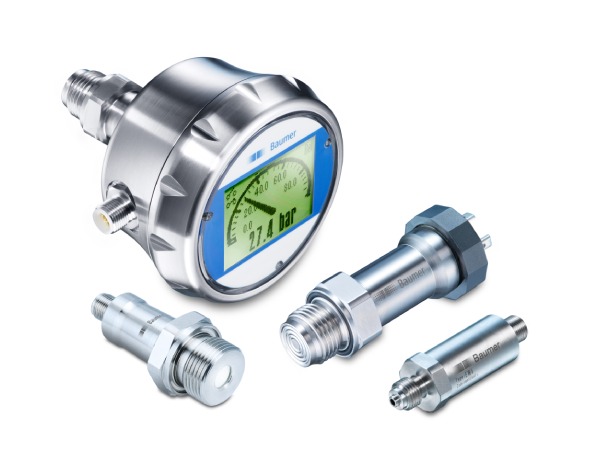
Pressure Sensors
Long-term stability, precision and optimal fit for every application. Relative pressure, absolute pressure and vacuum measurement.
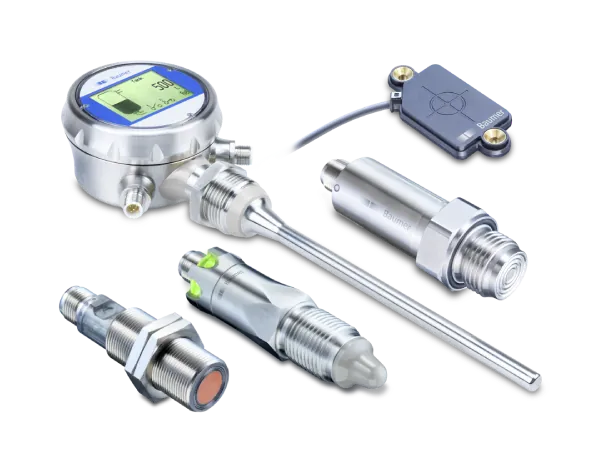
Level Sensors
Sensor solutions for point-level detection and continuous level measurement. Easy integration with all standard process connections.
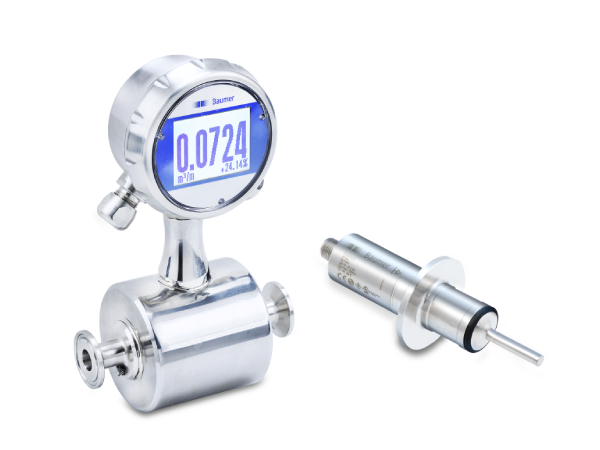
Flow Sensors
Volumetric flow, flow velocity and temperature measurement in a single sensor. Highly precise and stable measurements for efficiency and resource savings.
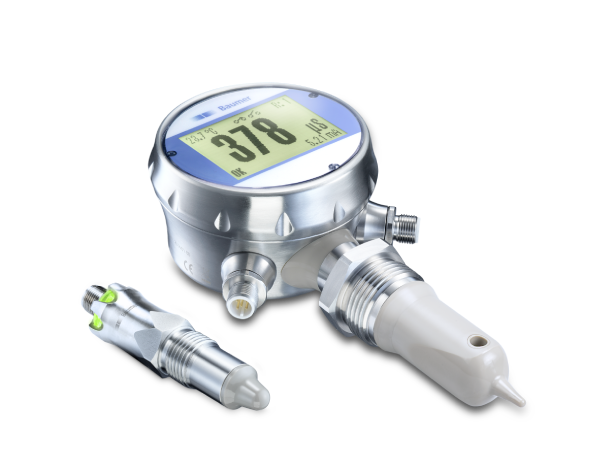
Liquid Analysis
Reliable sensors for conductivity measurement and air/gas bubble detection. Ensures product and process quality with extremely fast and precise values.
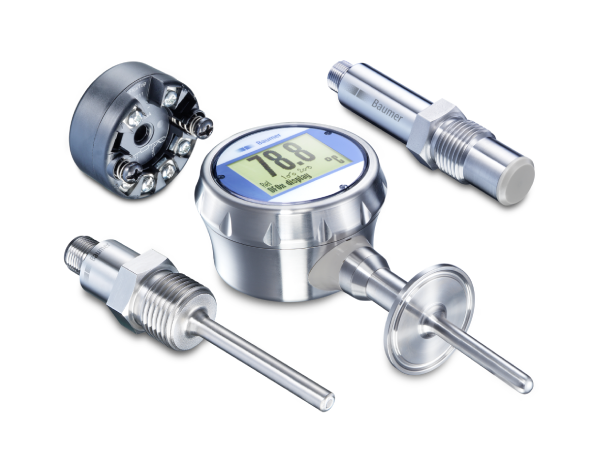
Temperature Sensors
Especially fast and precise. Rugged, extremely reliable and with a long service life.
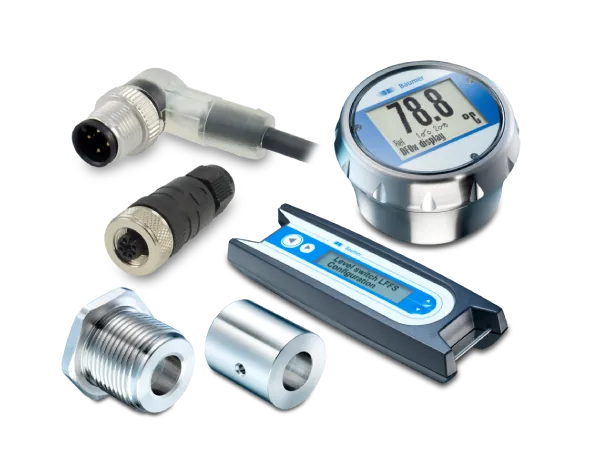
Process Sensor Accessories
Cables/connectors, process connections and adapters, interfaces.
Downloadable Documents
Product Fact Sheet – Process Automation for Liquid Cooling Systems in Data Centers
Return to the Data Center Liquid Cooling page
Back to Data Center Liquid Cooling PageHave a question?
Our experts are happy to answer all your questions and provide you with more information.