Video "5 Reasons for 10 GigE Cameras"
10 Gigabit Ethernet – Fast, Reliable and Easy Integration
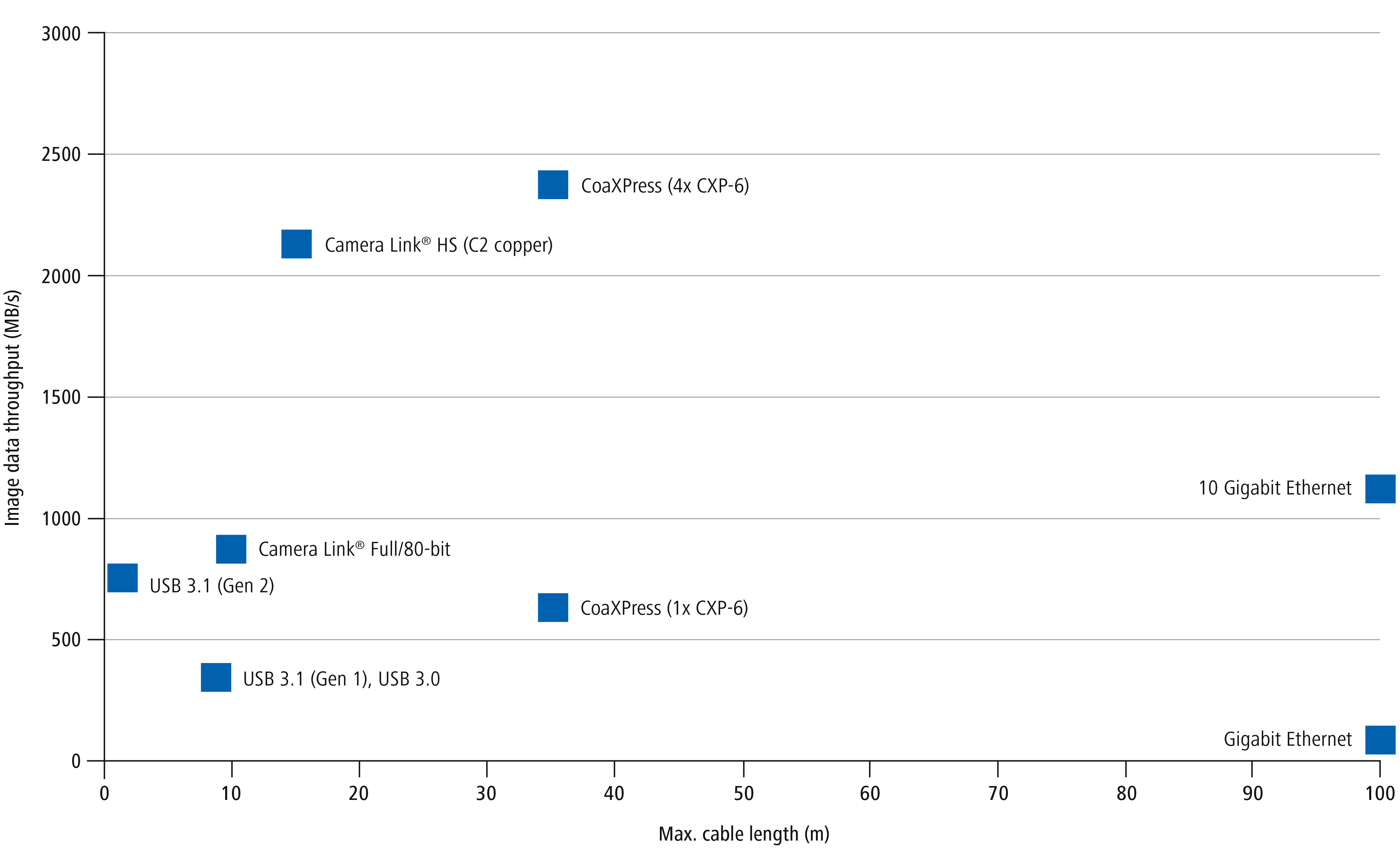
Gigabit Ethernet is the most widely used interface in industrial image processing due to low system costs, cables up to 100 m long and the GigE Vision standard for easy integration. The trend towards increased resolution and speed due to faster manufacturing cycles and new CMOS sensors requires cameras with increased transmission bandwidth. 10 Gigabit Ethernet allows the transmission of 10 times more image data at 1.1 GB/s, while offering all the benefits of the Gigabit Ethernet interface and requiring no change to the integration software.
High Bandwidth for Cables up to 100 m
The 10 GigE interface offers more powerful solutions for applications requiring high bandwidth for long-distance transmission up to 100 m with a single cable, eliminating the need for specialized components such as frame grabbers. Ethernet standard IEEE 802.3an defines the use of twisted pair cables under the 10GBase-T label. CAT6 cables are suitable for distances up to 55 m. For larger distances CAT6a cables are required. Where it is not economically feasible to replace existing CAT5e installations, transmission rates of 2.5 or 5 Gbit/s are recommended. The transmission rate is defined in the IEEE 802.3bz standard of the NBASE-T Alliance.
High Speed Image Processing
Precise detection in fast processes
Modern CMOS sensors offer excellent image quality with high sensitivity, low dark noise and very high dynamic range at high frame rates. Together with the 10 GigE interface, these advantages play to their strengths in fast processes such as video applications up to 4K at 60 fps, motion analysis and virtual reality applications.
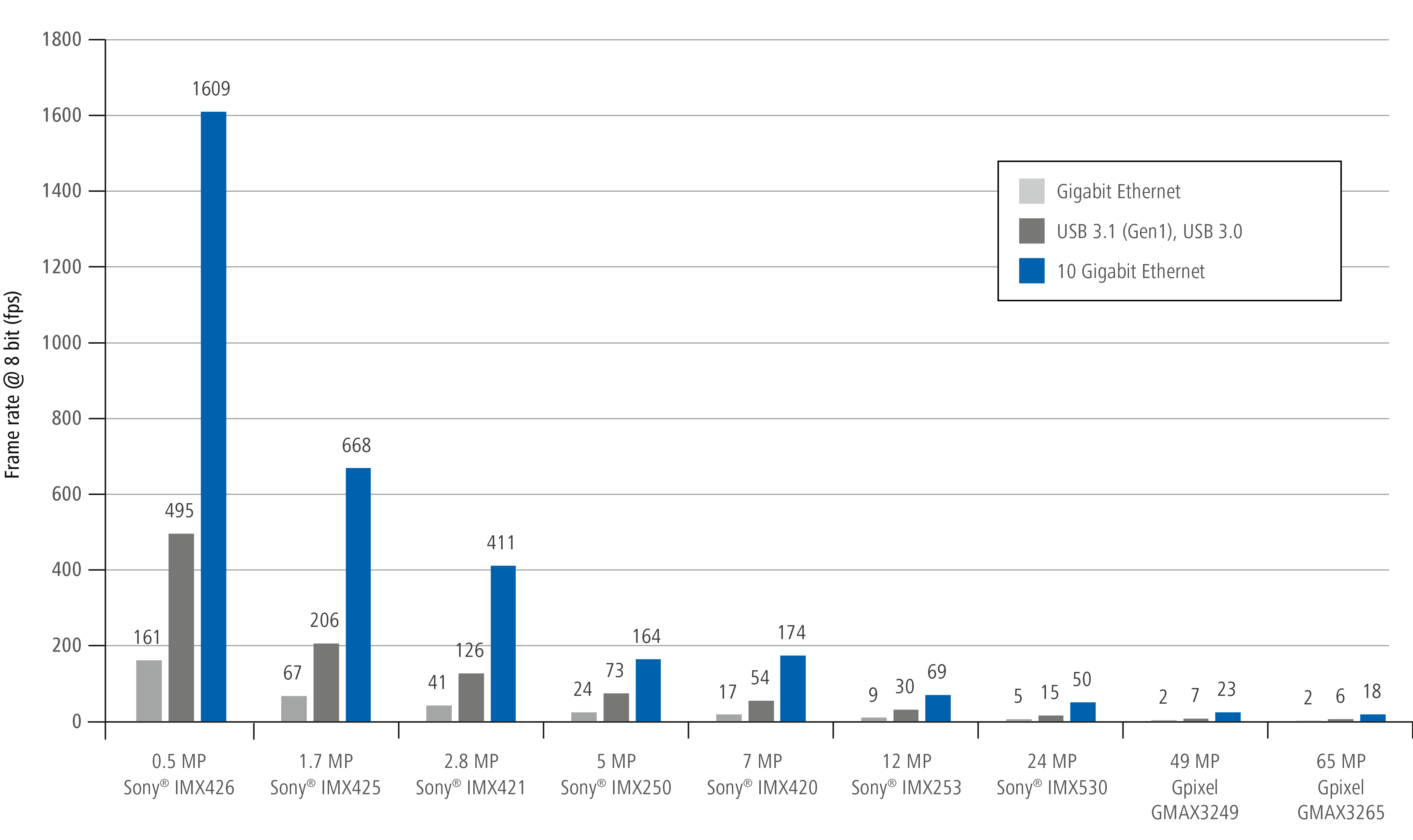
Baumer's LXT and QXT models are high-performance industrial cameras with a 10GBase-T interface and the latest CMOS sensors.
Short latency for increased machine speed
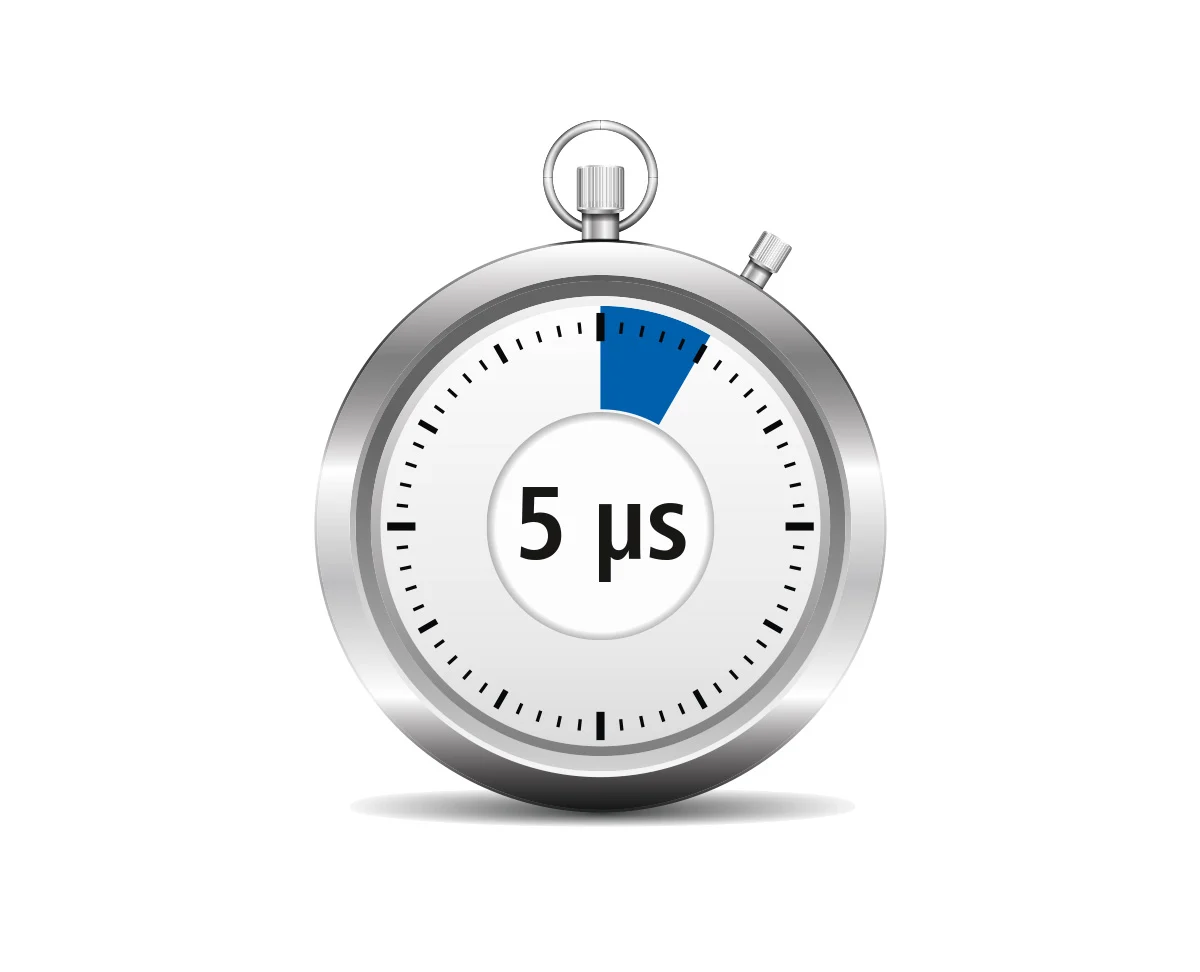
Compared to Gigabit Ethernet cameras, 10 GigE cameras significantly reduce overall system latency – that is, the delay between the server's request and receipt of the response. Firstly, the sensor reading process is much faster, which means shorter read times, and finally the 10 GigE interface speeds up data transmission. Latency also depends on the hardware and software components used. Latency has been reduced from 50 to 125 μs on Gigabit Ethernet to approximately 5 to 50 μs per frame.
Maximum bandwidth with minimum CPU load: Improved processing performance for your application
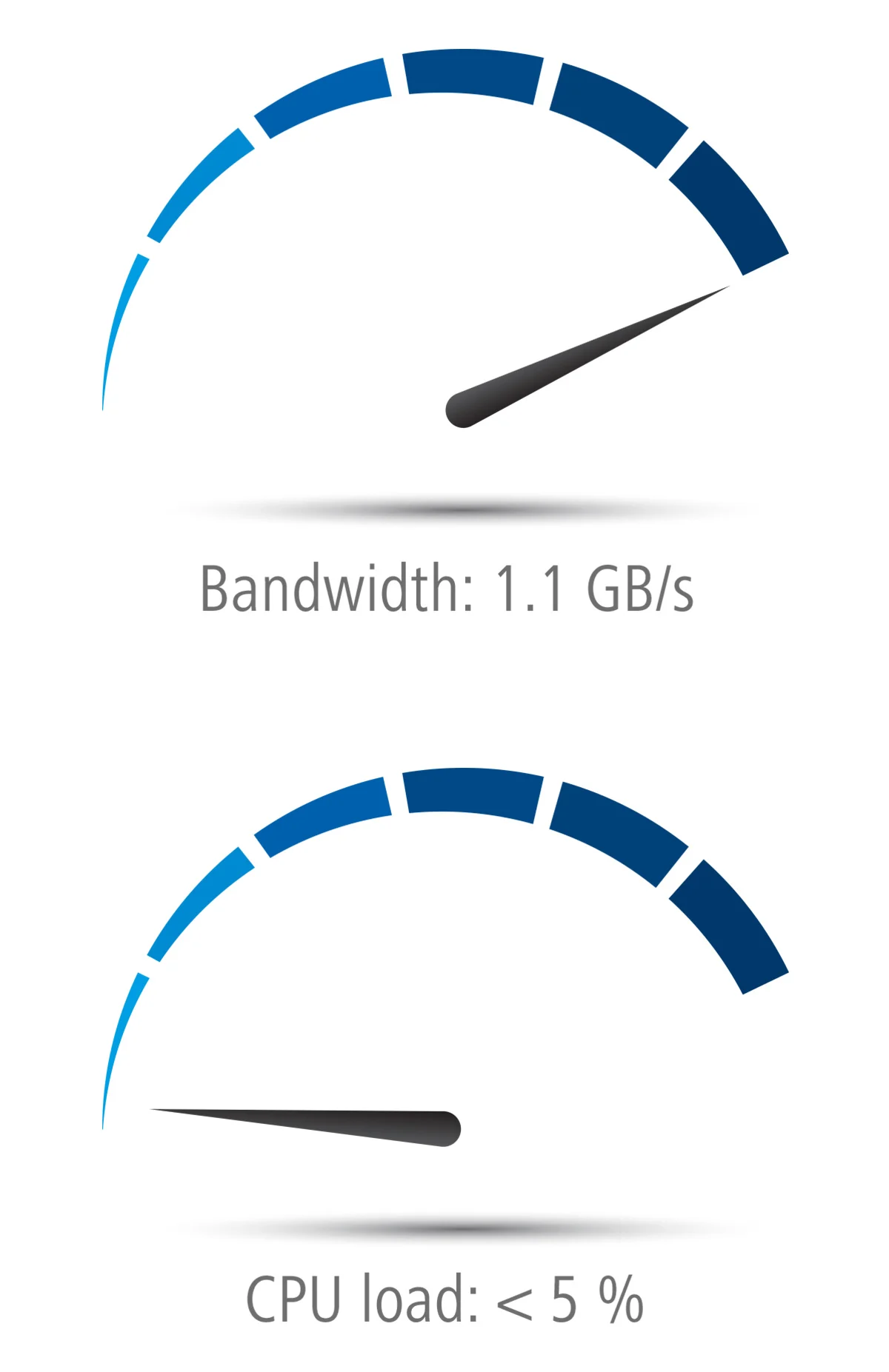
Permanent tests with QX-camera (image captured on internal memory) 1.1 GB/s (12 MP @ 92 fps) with full 10 GigE interface capacity and using Baumer GAPI Software, i7 CPU and Intel X540 T2 network card < Resulted in 5% lower CPU load.
Quick and Easy Integration
More and more PC motherboards support the 10GBase-T interface for direct implementation of 10 GigE cameras. Alternatively, affordable 10GBase-T standard network cards often provide single-cable solutions with data and power (Power over Ethernet) over the same cable. However, Camera Link or CoaXPress always requires an additional frame grabber card.
As of GigE Vision Standard version 2, changing application software during camera integration is a thing of the past, because the software is completely separate and independent from the Ethernet interface. Using GenICam, programming remains the same and interoperability with GigE Vision cameras is easily achieved.
Reliable Image Transmission
Baumer GigE Vision cameras and Baumer GAPI SDK do not lose a single frame thanks to the internal image memory and efficient filter driver. This has been proven in endurance tests under both Windows 7/10 and Linux. Camera Link or CoaXPress interfaces do not provide such high security in image data transfer.
Reducing System Costs
Because 10GBase-T does not require a standard interface card, or one that is much less expensive than Camera Link or CoaXPress, system costs and effort spent on software integration and field maintenance are greatly reduced.
Additionally, affordable standard Ethernet cables are sufficient to replace the much more expensive cables required for Camera Link. And thanks to the RJ45 Ethernet connector for field installation, you only have to pay for the necessary cable.
In situations where periodic rather than continuous image acquisition is required, for example in scheduled production, 10 GigE cameras with burst mode offer an alternative to CoaXPress. QX series cameras with 12 MP resolution can reach 335 fps in short acquisitions, which is approximately twice the speed of the quad CoaXPress CXP-6 cameras.
