"Factor 1" video
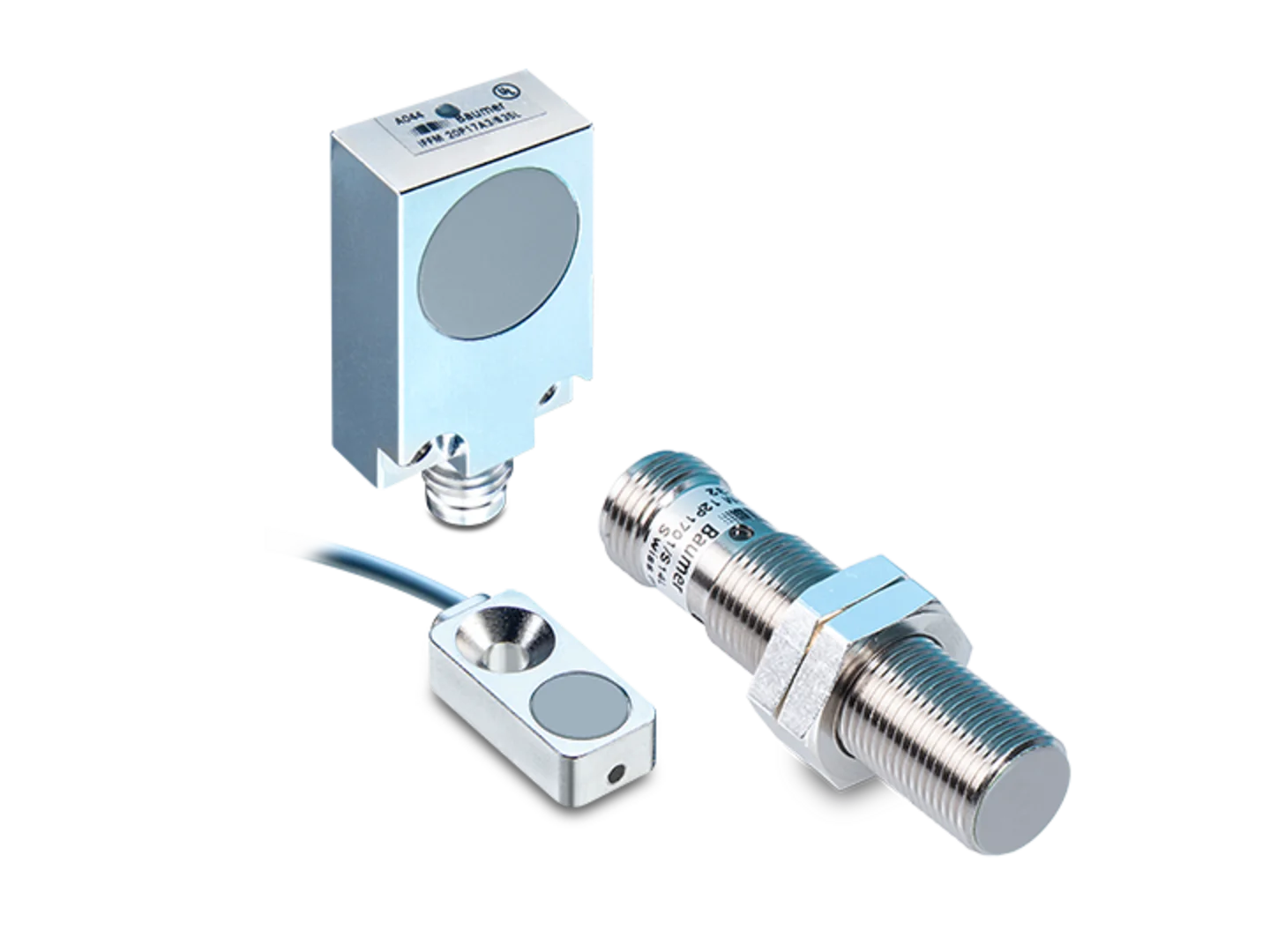
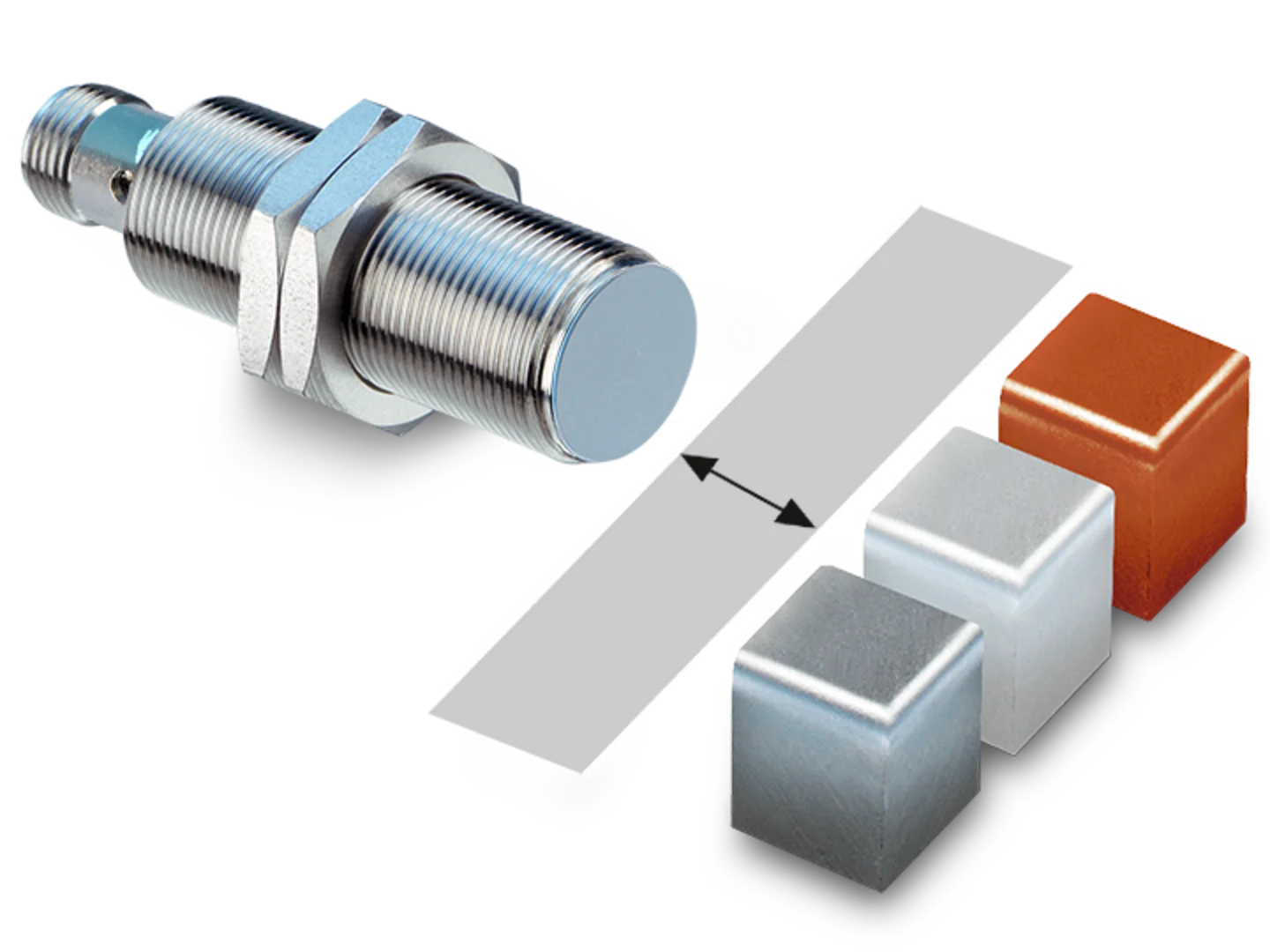
The principal benefit oaf Factor 1 sensors is the same switching distance on any metal. Such consistent distance provides significantly enhanced flexibility during system engineering and sensor installation. But the Baumer sensors even go beyond and provide more benefits: in terms of their ratio switching distance/speed they are the fastest in their class, furthermore they have exceptionally high switching reserve capacities.
Your benefits
- More flexibility in machine design
- 2-4 times the measuring range on aluminum and non-ferrous metals compared to standard inductive distance sensors
- Direct measurement on objects even with changing materials
- Negligible unit-to-unit variation allows for increased manufacturing tolerances
- Easy installation
- 1-point teach (zero) instead of mechanical fine tuning with spacers
- Sensor replacement without PLC reconfiguration thanks to default calibration ex works
- Teachable measuring range for automatic format alignments
- Better cost-effectiveness in control integration
- Eased evaluation thanks to linear output characteristic
- No individual correction polynomials required for conversion (calibration ex works)
- High process quality
- Enhanced positioning precision thanks to negligible unit-to-unit variation
- Low temperature drift and excellent EMC properties
Technology
Factor 1 sensors compared against standard sensors
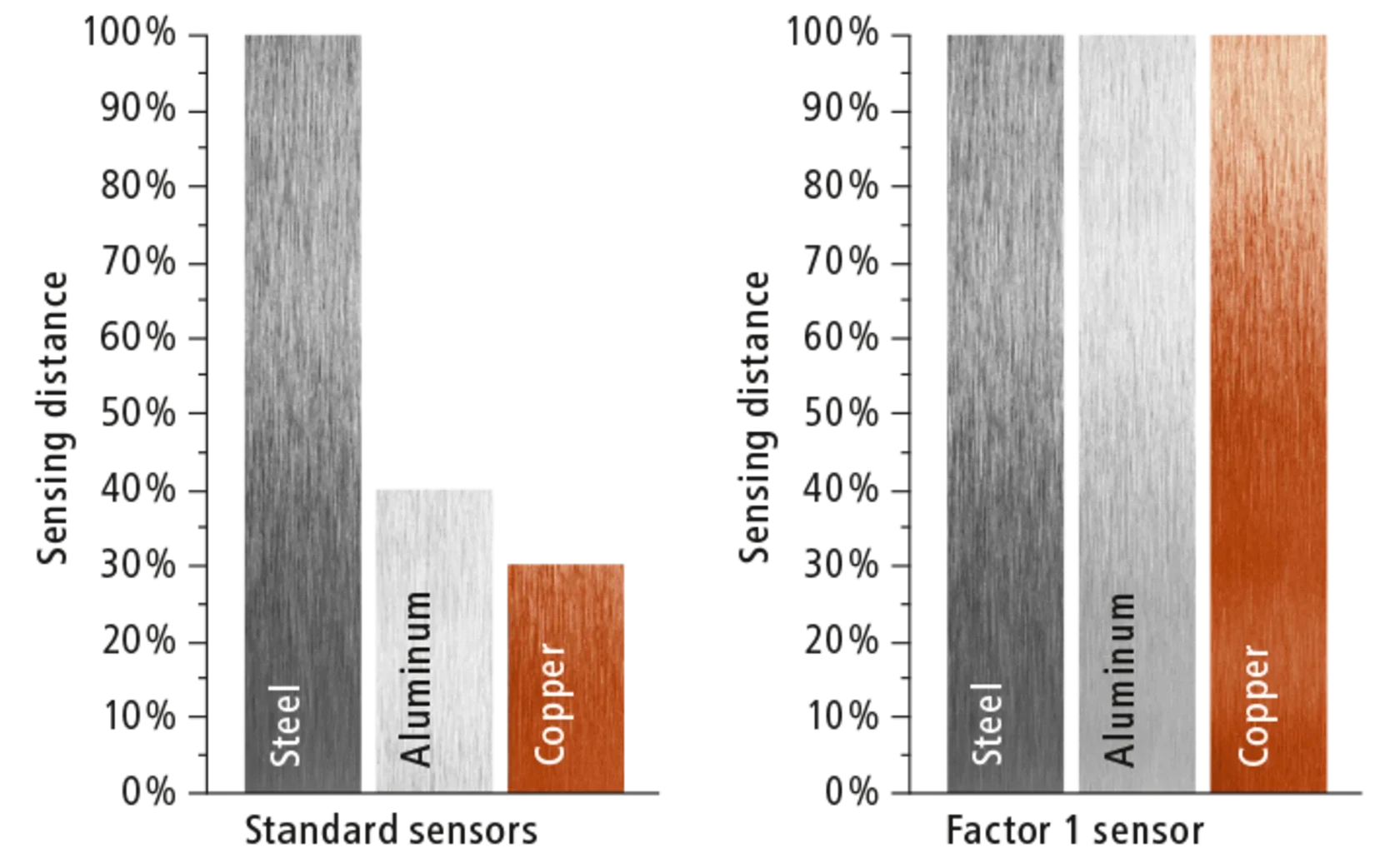
The measuring range on non-ferromagnetic metals of standard sensors is reduced by up to 70%. Factor 1 sensors integrate microcontroller and temperature-stabilized reference circuit that compensate for this unwanted effect. Factor 1 sensors are free from any material-specific reduction factor and therefore ensure the same long measuring range on any metal. That's why they are ideal for measurements on non-ferromagnetic metals such as aluminum or non-ferrous metals.Thanks to the integrated microcontroller, these sensors provide the same benefits as linearized AlphaProx sensors: negligible unit-to-unit variation, low temperature drift, linearized characteristic and several teach options to adapt to application-specific measuring range or to compensate for mechanical installation tolerances.
Downloads
Brochures / Catalogs
-
Flyer – AlphaProx inductive sensors