Functionality and Technology of Magnetic and Cylindrical Sensors
Magnetic Sensors
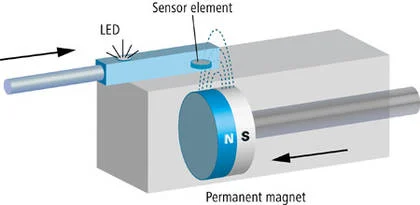
The magnetoresistive element is made of a special material that responds only to magnetic fields generated by a permanent magnet, outputting a digital signal. This material, which can detect even very weak magnetic fields, is approximately ten times more sensitive than the Hall element, thus significantly increasing detection distances. Magnetoresistive proximity switches are omnipolar and therefore can detect both the north and south pole of the permanent magnet.
Detection from Tank Walls
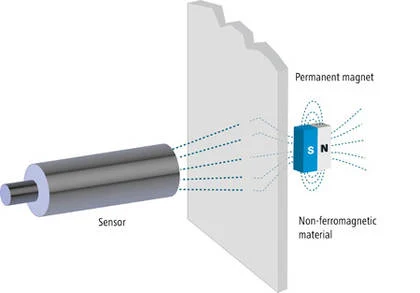
The sensor can detect magnetic fields through non-ferrous materials. This is particularly useful where the sensor or permanent magnet requires shielded or isolated mounting or when they are separated from each other by a tank wall.
Magnetic Cylinder Sensors
The piston inside the cylinder carries a permanent magnet that creates a magnetic field that penetrates all non-ferrous materials. It is triggered when the sensor detects the magnetic field. To mount the sensor, it is inserted into the slot in the cylinder and secured. Cylinder sensors can be attached to all conventional cylinders using the clamps and bolts available as accessories.