Functionality and Technology of Optical Distance Sensors
triangulation
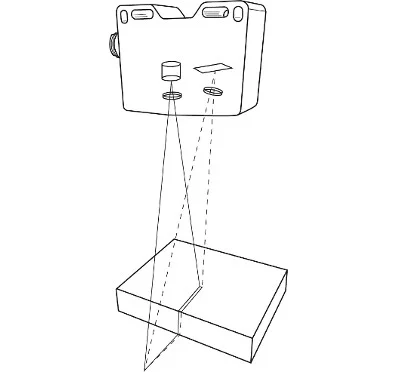
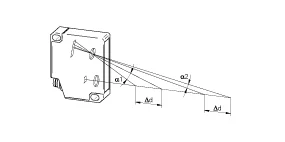
Distance measurement is based on the triangulation principle. The laser beam hits the object as a small spot. The sensor's receiver (photodiode line) detects the position of this point. The angle of incidence changes with distance and thus the position of the laser point on the receiver also changes. The photodiode line is read by an integrated microcontroller. The controller calculates the angle from the light distribution and then calculates the distance to the object from that angle. This distance is either output at the serial port or converted to an output current proportional to the distance. The microcontroller provides high accuracy and measurement precision. The photodiode line and microcontroller combination suppresses distracting reflections and provides reliable data from critical surfaces. The sensor adapts to different colors by adjusting its internal sensitivity, making it virtually independent of the color of the object. A digital output is activated if there is no object in the measuring range or there is insufficient light to detect the object correctly, for example if the sensor is dirty. Possible resolution and accuracy vary with distance. The same distance Δd produces a large change in angle α1 when close to the sensor, but a much smaller change in angle α2 at a farther distance. This nonlinear behavior is corrected by the microcontroller so that the output signal remains linear with distance.
Measurement Functions
Distance Measurements
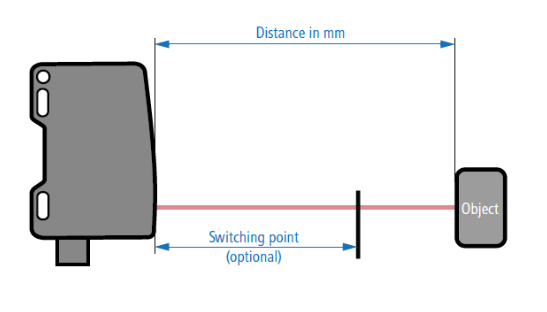
In distance measurement, the sensor is immediately ready for use and gives the distance from the sensor to the object. The measured value can be used, for example, for precise positioning of objects or control of a system. Additionally, a digital output can optionally be parameterized.
Tolerance Measurement
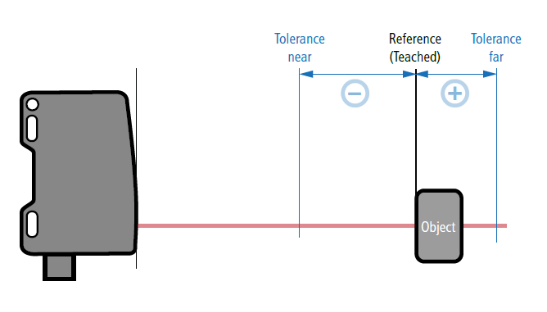
For example, if the dimensional accuracy of objects is to be checked, a direct tolerance measurement can be made by teaching a reference and thus the deviation from the nominal size can be determined directly. Here too, a digital output can be parameterized accordingly.
Beam Shapes
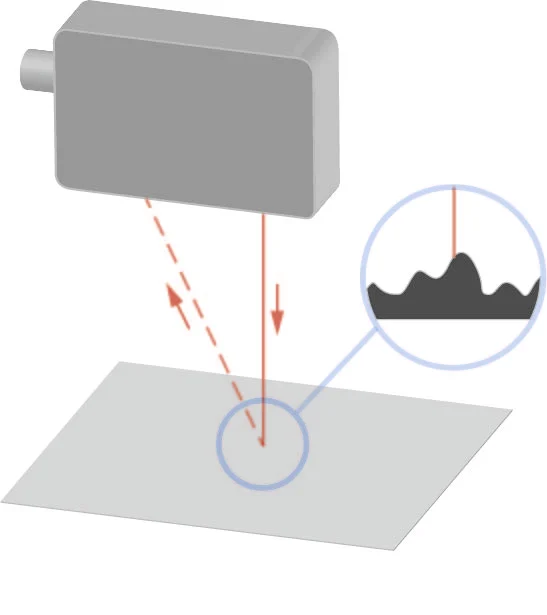
Laser Point
Precise measurement of small objects thanks to focused laser spot smaller than 0.4 mm
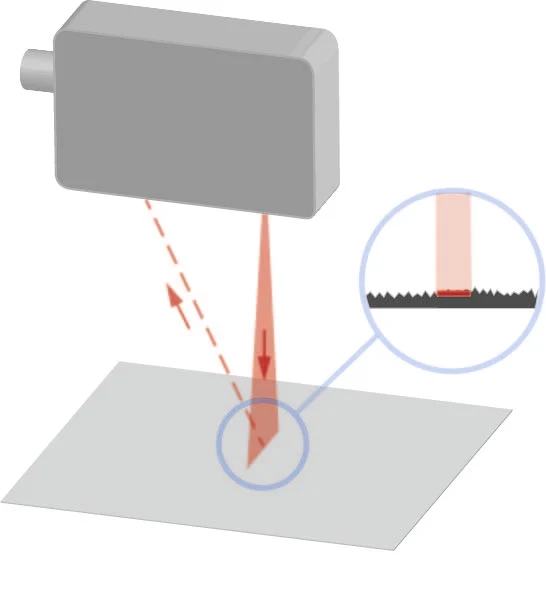
Laser Line
Stable measurements on rough surfaces and textured color surfaces thanks to the thin laser line of less than 10 mm
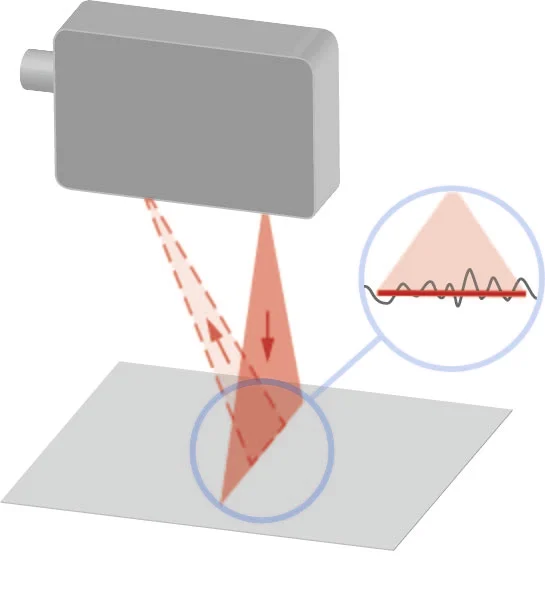
multi-spot
Stable measurements with more than 600 measurements on heterogeneous shiny and very rough surfaces with an extra-long laser line of less than 72 mm
Focus Ranges
Laser distance sensors provide high-precision distance and position measurement with resolution of less than one micrometer. However, in practice, there are noise effects that can reduce the repeatability of optical distance measurements. With the introduction of selectable focal ranges, Baumer OM70 laser distance sensors provide significantly better local repeatability and thus more reliable measurement results and higher process reliability in automatic measurement tasks.
Special Features
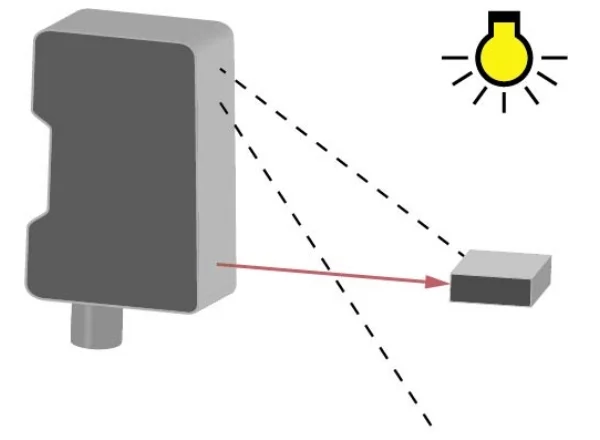
High Ambient Light Immunity
Thanks to powerful algorithms, laser distance sensors are very insensitive to external light sources. This guarantees reliable and robust operation.
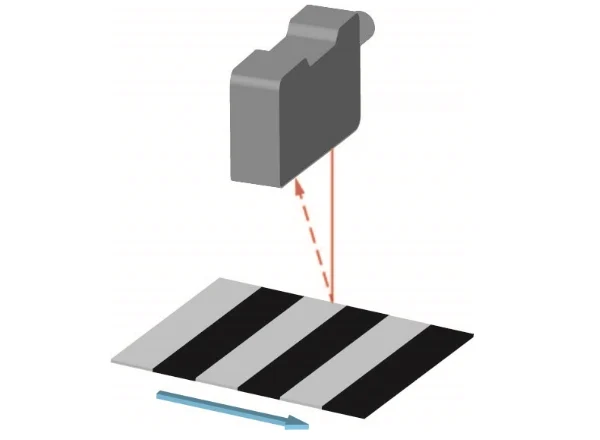
Automatic Exposure Control
Baumer's optical distance sensors adapt to different object colors and brightness levels, so they are not affected by the reflectivity of the object. It is possible to measure objects with a reflectivity of up to 2%.
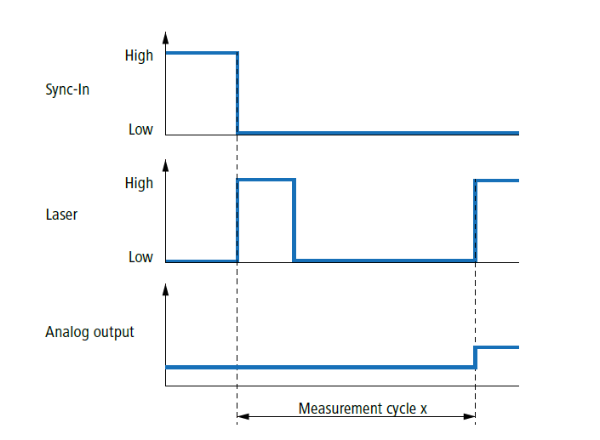
Synch-In / Triggering
Measurements of multiple sensors can be synchronized via the sync-in input. For thickness measurements, two sensors can be triggered simultaneously in synchronous mode. In asynchronous mode, sensors that interfere with each other can be operated sequentially.
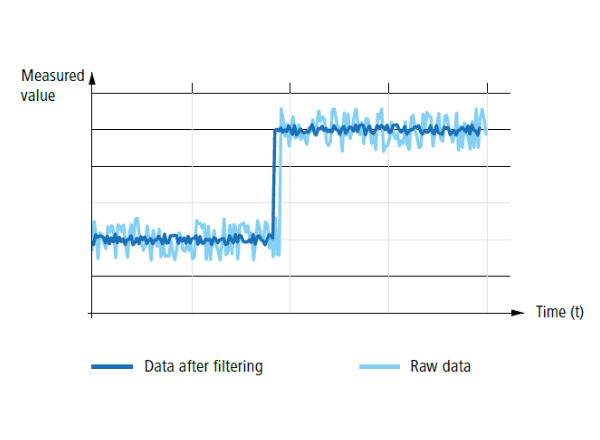
Programmable Filter Functions
The noise of the output signal can be reduced by activating filtering, thus increasing the resolution. The filter is used to suppress measurement errors. The output changes only after a certain number of measurement values. This filter does not affect the measurement frequency, but does affect the response time. The filter function can be parameterized by selecting predefined sensitivity modes.
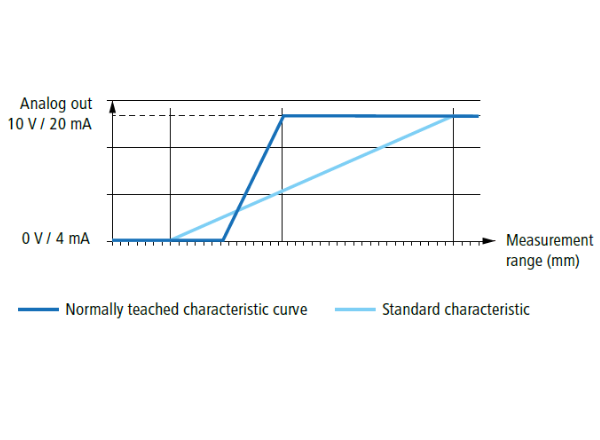
Programmable Measurement Ranges
The measuring range can be set by the user within the maximum measuring range via the teach-in button, teach-in line or display. The analog output makes a full stroke within this taught range and thus provides higher measurement accuracy. The factory setting is the maximum measuring range.
Configurable Switching Output
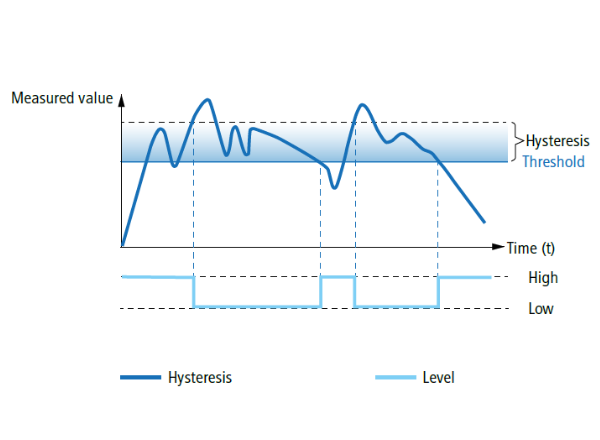
When a defined measured value exceeds or falls below a certain level, a switching output must be activated. For a reliable switching signal, the hysteresis (difference between the switching point and the return switching point) can be parameterized in millimeters in absolute terms. Regardless of the object's position in the field of view, the safe operation of your system is guaranteed.
Flight Time/Run Time Measurement
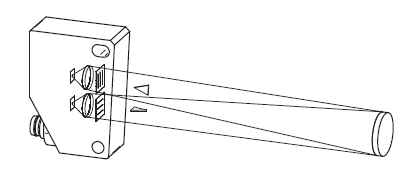
With the runtime measurement method, distances are measured indirectly by measuring the time required for a signal to travel over the distance to be covered. This is implemented in the real world as follows: a sender emits a burst of signal, and when this signal is reflected by an object it is received by the sensor's receiver. The sensor's electronics evaluate the elapsed time and/or phase shift encountered and convert this information into distance information. With runtime technology, objects can be detected precisely and reliably even at long distances.
Multipoint Light Section Sensors
Baumer's innovative multi-point measuring principle is based on light section technology. The sensor determines up to 600 measurement values of an object per measurement and uses an intelligent evaluation process to calculate the distance from these values. Thanks to its resolution of up to 2 µm at a measuring frequency of 500 Hz, the sensor offers stable and precise measurement results.