Pixel Correction of ams CMV50000 Sensor Cameras [AN201908]
Baumer Cameras: LXG-500x, LXC-500x
This Application Note describes pixel correction and other special camera features of the CMV50000 image sensor.
General Information
CMV50000 sensors offer a special feature of noise visible at the pixel level in low light conditions; This is hereafter referred to as pixel noise. Studies have shown that there are two different noise components at the pixel level. This Application Note explains both noise components and offers corresponding pixel corrections to improve image quality.
Sensor Behavior
FPN Pixel Noise (Fixed Pattern Noise)
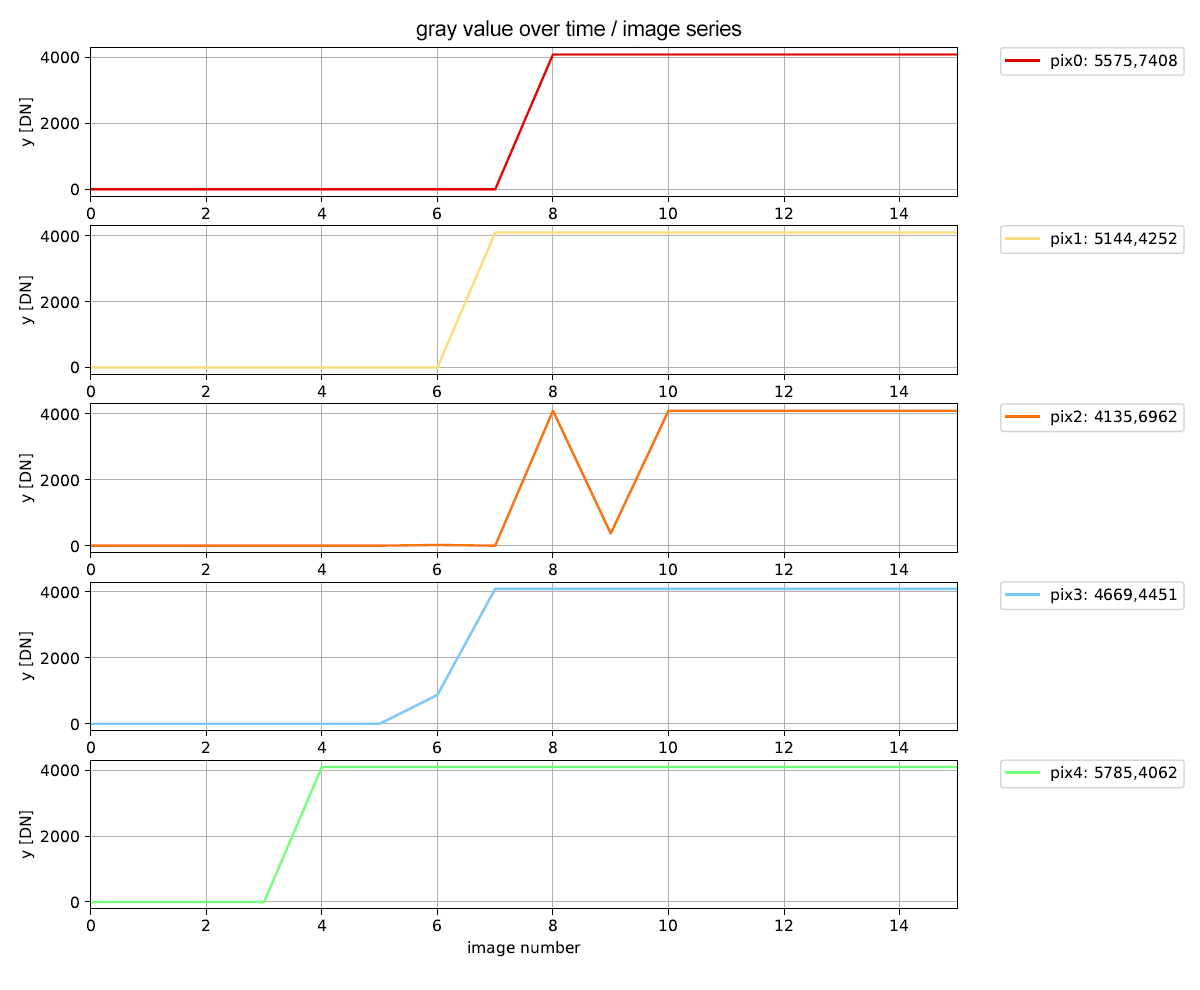
The CMV50000 provides a fixed pattern and time-related noise component called FPN, characterized by the pixel gray value along the x and y coordinates. The pixel gray value is always different from that of neighboring pixels in the received image sequence.
RTS Pixel Noise (Random Telegraph Signal)
Unlike FPN pixel noise, RTS pixel gray values exhibit random behavior, meaning that time and gray value are unpredictable. The image below shows the behavior of the 5 pixels with the most noticeably different gray values on the active sensor surface.
Salt and Pepper Noise
FPN pixel noise is also known as Salt and Pepper Noise due to its black and white pixel pattern. This definition combines with the definition of dead pixels, which are dead (white or black) over the camera's entire operating range.
Addictions
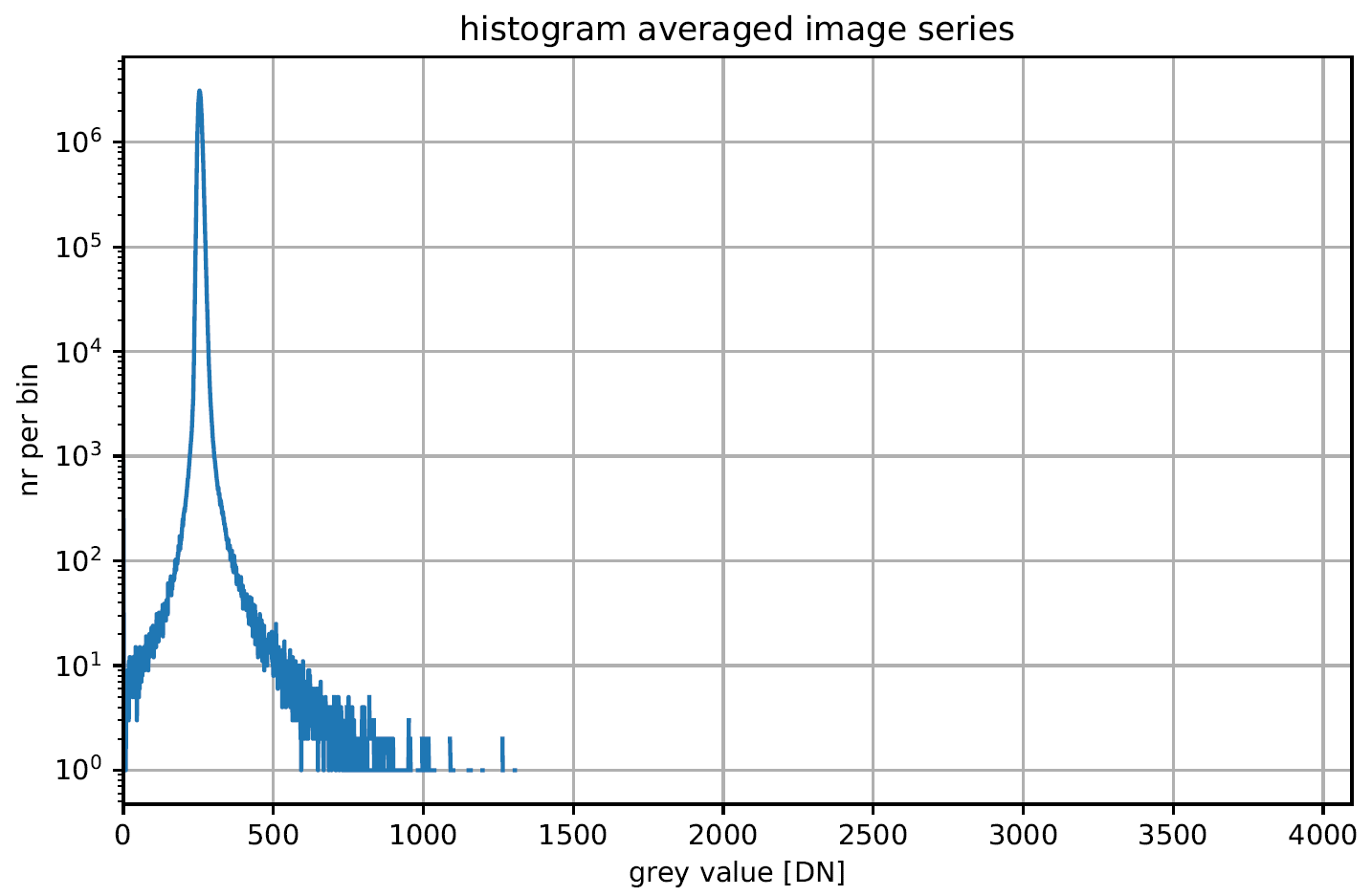
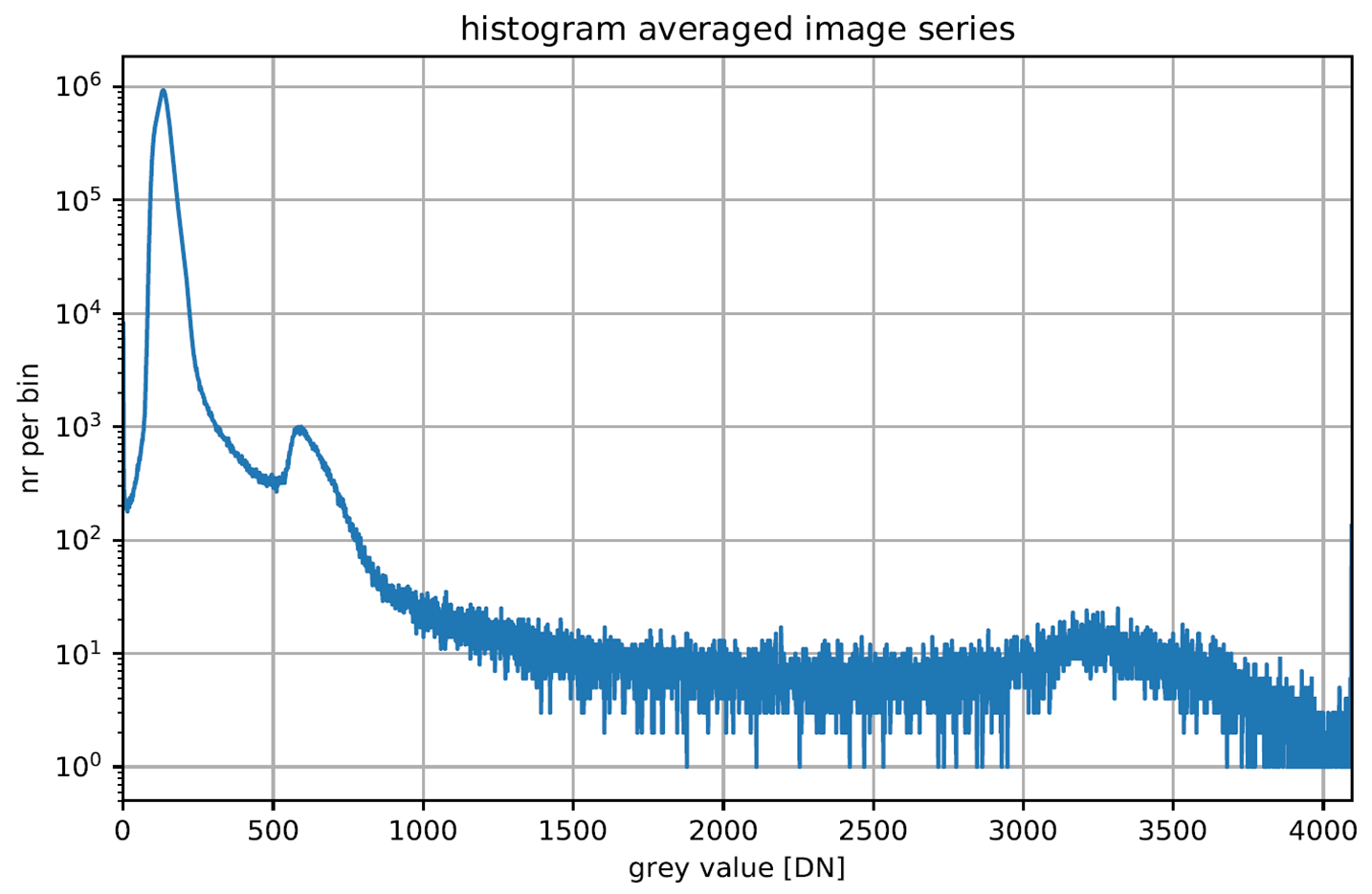
The sensor's pixel noise exhibits dependencies on camera temperature and exposure time. In other words, increasing temperature causes a significant increase in the number of pixels with different gray values than neighboring pixels. A similar situation applies in terms of exposure time – the longer the exposure time, the greater the FPN pixel noise.
The histograms below show how pixel noise increases with increasing temperature and extended exposure time. It is clearly seen that the number of pixels outside the normal distribution has increased significantly. To counter this situation, both temperature and exposure time should be kept as low as possible to reduce pixel noise.
Root Cause
CMV50000 sensor manufacturer ams describes this as leaks in the capacitive memory cells of the pixels. It is unpredictable when such capacitive leakage will occur. Therefore, it is not possible to tell when the pixel will be completely black (minimum gray value) or white (maximum gray value). Moreover, it is seen that this effect doubles with every 10 °C temperature increase starting from 30 °C.
Pixel Correction
Given the large amount of pixels on the active sensor surface that differ from neighboring pixels, LUT-based correction similar to dead pixel correction is not applicable here. Studies have shown the proportion of intrusive pixels to be in the single digit percentages, depending on the camera's operating mode.
Basic Principle
Due to the large number of pixels and time-dependent behavior, a dynamic correction is required using 9×1 filters. In the filter environment, the pixel's gray value is compared to neighboring pixels and a threshold is used to decide whether to apply correction. As a result, a high threshold means significantly different gray values and less pixel correction than using a low threshold.
Correction Example
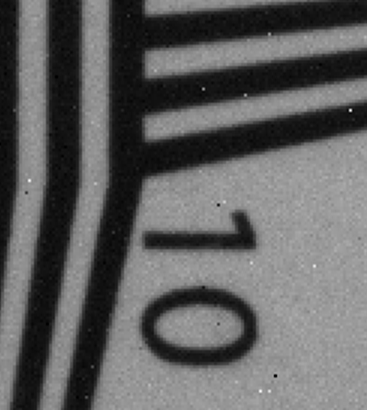
The images below show pixel correction using a test image.

Side Effects
The non-linear filter function may have an impact on the results measured with the EMVA 1288, resulting in inconsistent values. Filtering also interacts with the Modulation Transfer Function (MTF) of the camera system. Blurry edges can negatively affect resolution.
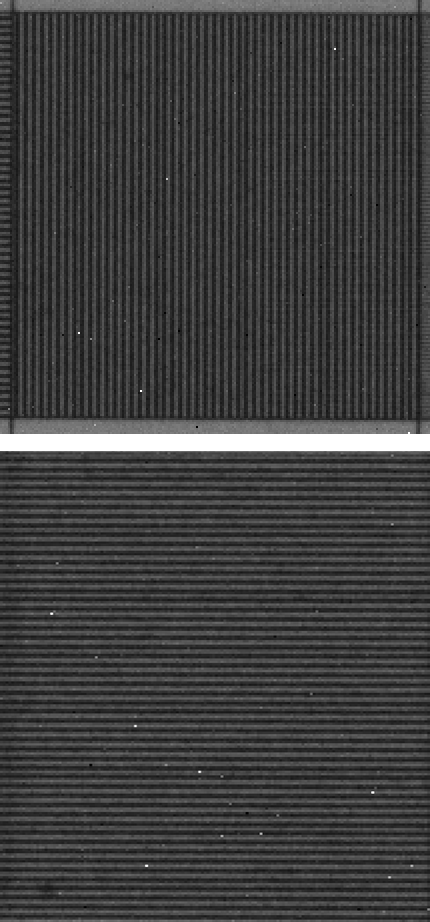
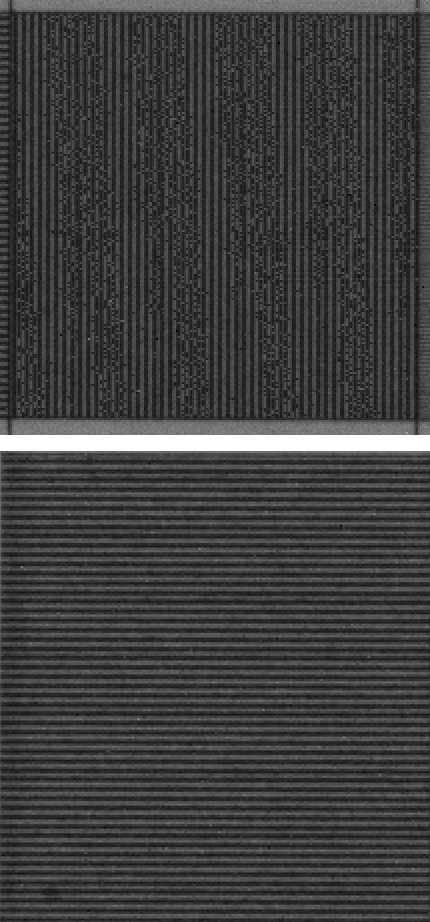
Artifacts in line-by-line correction can distort delicate vertical structures. However, this depends on several variables such as build size, pattern/repetition, and resolution capabilities (sharpness) of the lens. The images below show possible artifacts that may occur.
Alternative Methods for Pixel Correction
Another option for correcting FPN pixel noise is Flat Field Correction, which is applied across the entire image. However, RTS pixels cannot be handled by this method. Dynamic approaches with an extended filter environment that takes vertical structures into account can also be considered as alternative solutions.
