Installation of Force Sensors
When force sensors are installed, many general conditions must be observed for accurate measurement results. In addition to suitable environmental conditions, flat and sufficiently hard bearing surfaces and load performance ratios are also of great importance. Baumer DLM force sensors are available in Button, Inline and Screw designs. The individual steps for mounting force sensors are described below.
Button Force Sensors [DLMx0-BU]
Button force sensors are suitable for pressure force measurement in harsh industrial environments.
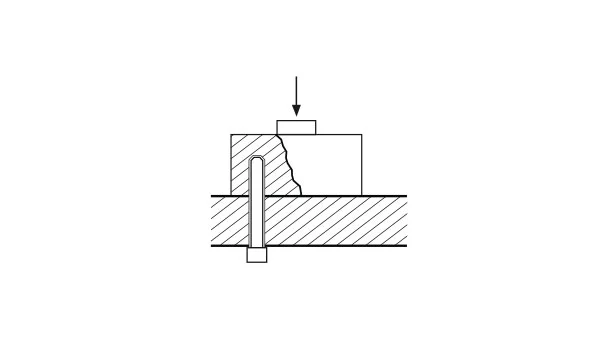
The sensor measures the applied force by screwing one side to the machine element. Button pressure force sensors are mounted on a flat and smooth surface with four screws. Mounting should be done with a torque wrench and torque values appropriate to the sensor size.
The contact surface for the force sensor must always be larger than the sensor diameter, have a maximum flatness of 0.1 mm and a roughness of Ra=1.6 um. The contact surface of the sensor must have a sufficiently rigid structure that does not deform under load. A minimum thickness of 5 mm is recommended for DLM20 and a minimum of 10 mm for DLM30/DLM40.
Inline Force Sensors [DLMx0-IN]
Inline force sensors are suitable for tensile and compressive force measurement in harsh industrial environments.
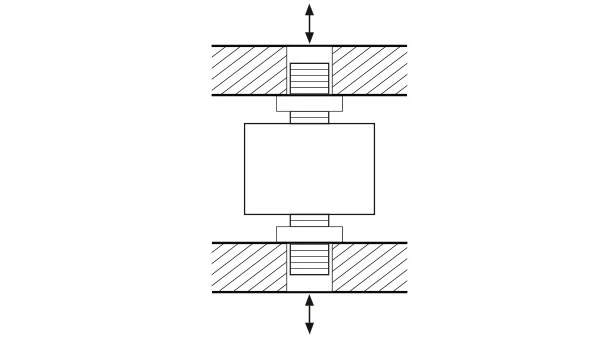
Ideally, the force sensor is screwed with one side in full contact with the hexagonal bar of the sensor, and the other side is fixed with a nut. Three different versions are possible for the connection of inline sensors to the mating part.
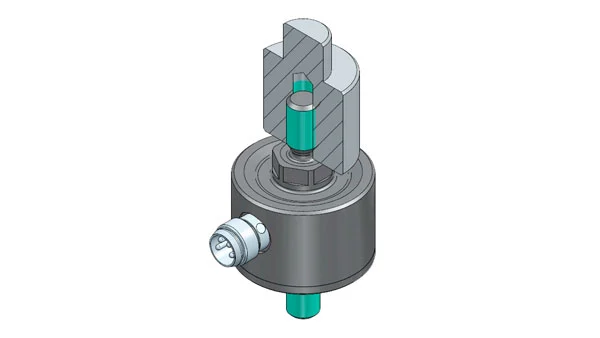
The Tool/Counter Piece is Mounted on the Collar:
Make sure the thread length of the mating part is deep enough. Use a torque wrench for assembly on the main thread.
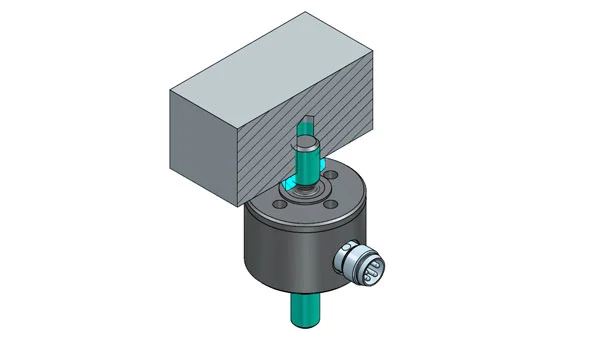
Tool/Counter Part Fixed with Nut:
Make sure the thread length of the mating part is deep enough. Use a torque wrench to tighten the nut on the main thread.
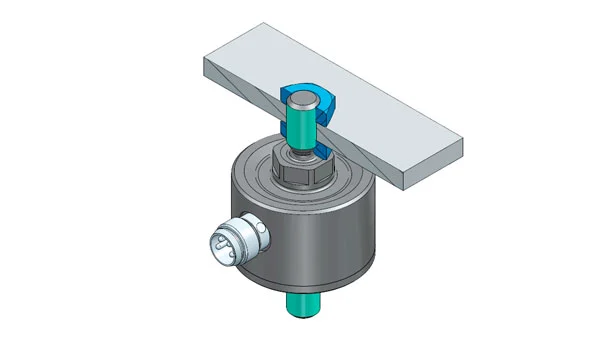
Through-Hole Tool/Counter:
The maximum value of the plate thickness should not be exceeded. Use a torque wrench to tighten the nut on the main thread.
Screw Force Sensors [DLMx0-SO]
Screw force sensors are suitable for tensile and compressive force measurement in harsh industrial environments. Installation of force sensors is carried out in two steps: mounting on the main thread and mounting on the screw plate.
Step 1: Mounting on Main Thread
There are generally four different options for mounting on the main thread.
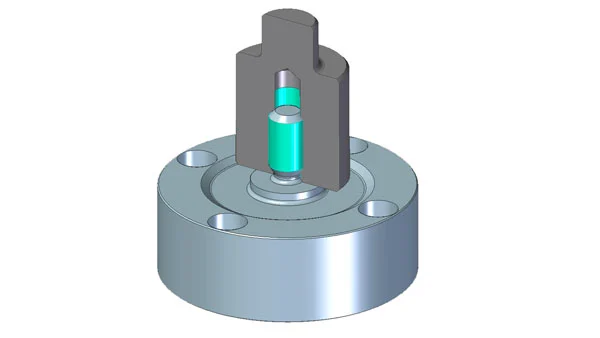
The Tool/Counter Piece is Mounted on the Collar:
Make sure the thread length of the mating part is deep enough. Use a torque wrench for assembly on the main thread.
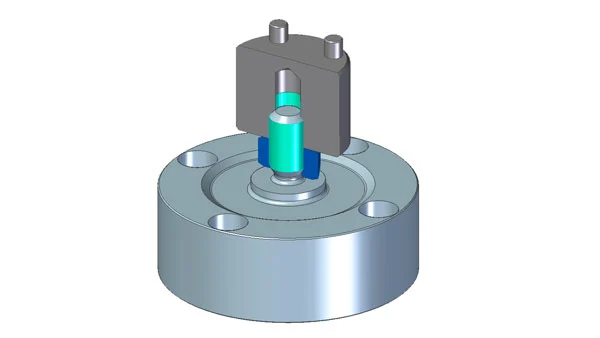
Tool/Counter Part Fixed with Nut:
Make sure the thread length of the mating part is deep enough. Use a torque wrench to tighten the nut on the main thread.
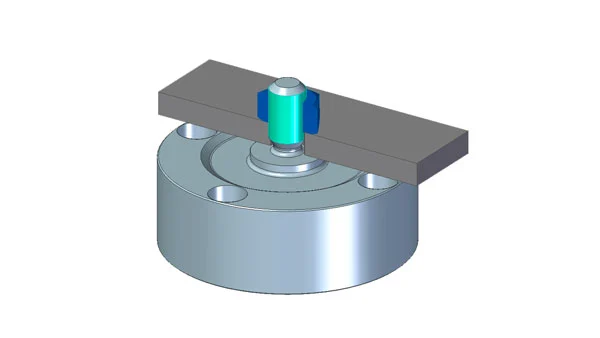
Through-Hole Tool/Plate:
The maximum value of the plate thickness should not be exceeded. Use a torque wrench to tighten the nut on the main thread.
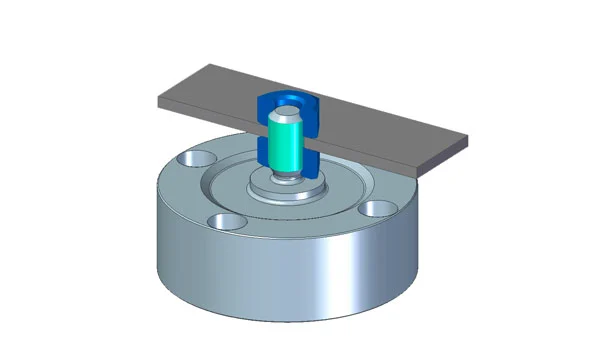
Through-Hole Tool/Plate is Fixed with Nut on Both Sides:
The maximum value of the plate thickness should not be exceeded. Use a torque wrench to tighten the nut on the main thread.
Step 2: Mounting on Screw Plate
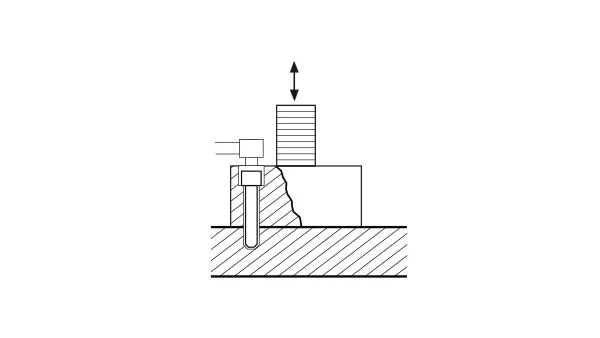
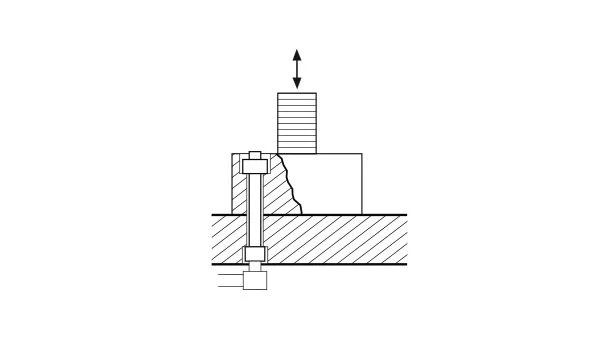
Mounting of screw force sensors to the contact surface is done with four screws on a flat and smooth mechanically machined surface. The sensor can be mounted both from the top and from the bottom. When mounting from the bottom, top threads must be placed in the oval-shaped holes. It is recommended to use a torque wrench during installation and comply with the following tightening torque values for the relevant sensor size.
General Building Information
The following overview shows potential error possibilities to avoid in practice. Mounting instructions are shown using the button type, but are also valid for Inline and Screw construction types.
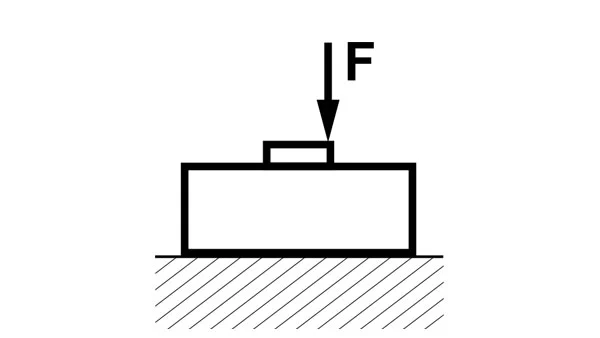
The force must be applied centrally. Non-central force application leads to linear and precision deviations.
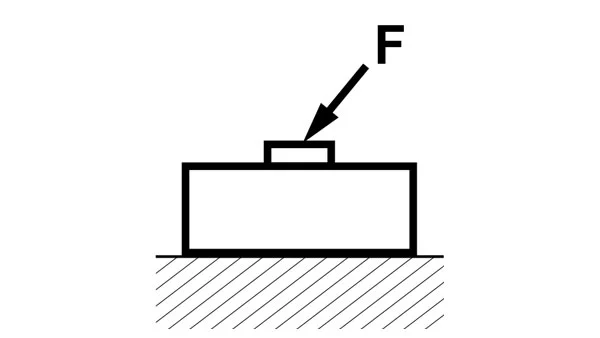
The force must be applied axially. Non-axial force application results in linear and precision deviations.
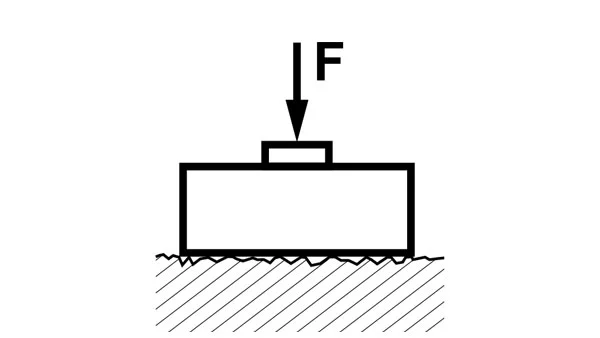
The sensor contact surface must be smooth. A very rough surface will lead to linear and precision deviations.
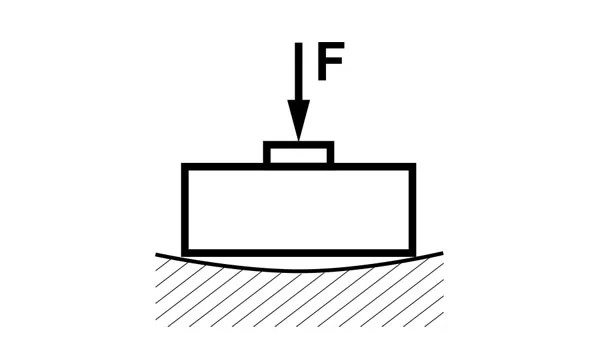
The sensor contact surface must be hard enough and not deform under force. A contact surface that is too soft will cause sensitivity deviations and, in extreme cases, sensor failure.
For Inline and Screw force sensors, an additional requirement must be taken into account: