Benefits
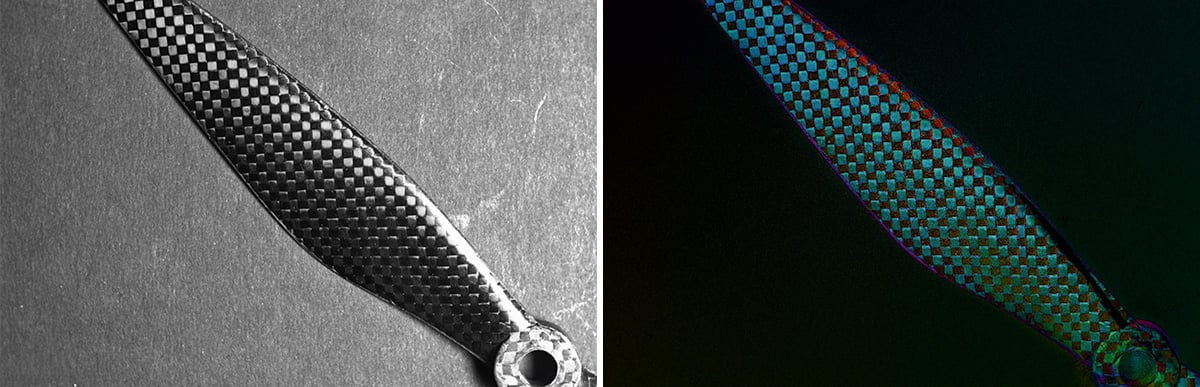
Baumer's CX series polarizing cameras integrate on-chip polarizing filters at the pixel level. In this way, it provides higher contrast in intensity images for examinations on low-contrast or reflective surfaces and transparent materials. This efficient approach evaluates properties such as wavelength (color) and amplitude (brightness) of light, as well as the direction of vibration, or polarization, of the light wave resulting from reflection and refraction effects in materials.
Your Benefits:
- Higher contrast in intensity images of low-contrast material surfaces that locally polarize light to different degrees, such as carbon fiber reinforced polymer (CFRP)
- Higher contrast in intensity images of reflective surfaces by suppressing portions of reflected light, such as glass, plastic and metallic shiny materials, packaging films
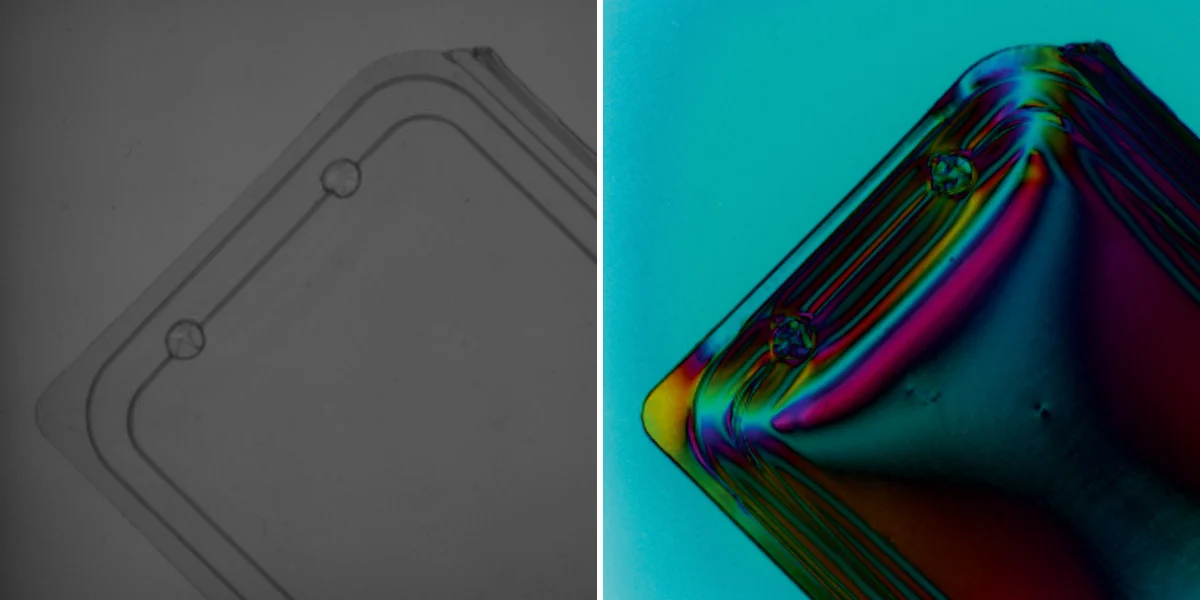
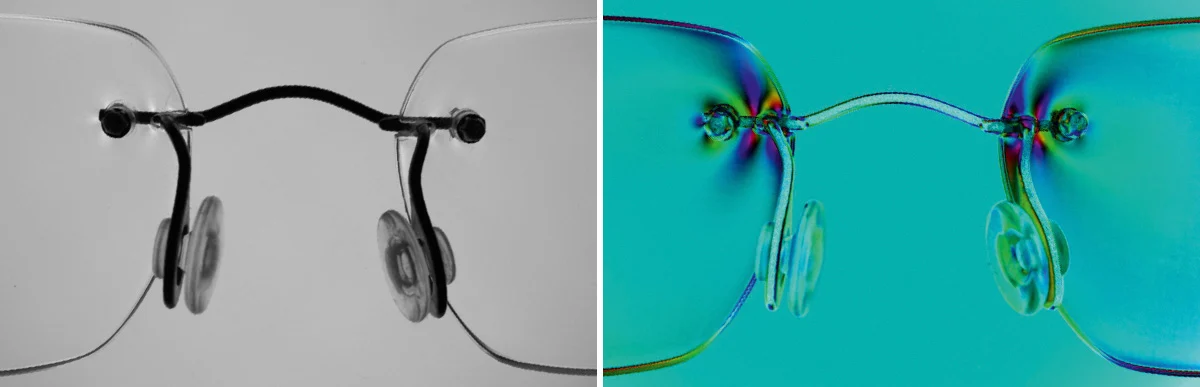
- Visualization of residual stress in transparent materials, e.g. glass or plastic, thanks to refracted light
Examples:
Left: Monochrome camera imaging
Right: Imaging with polarization camera, color polarization degree
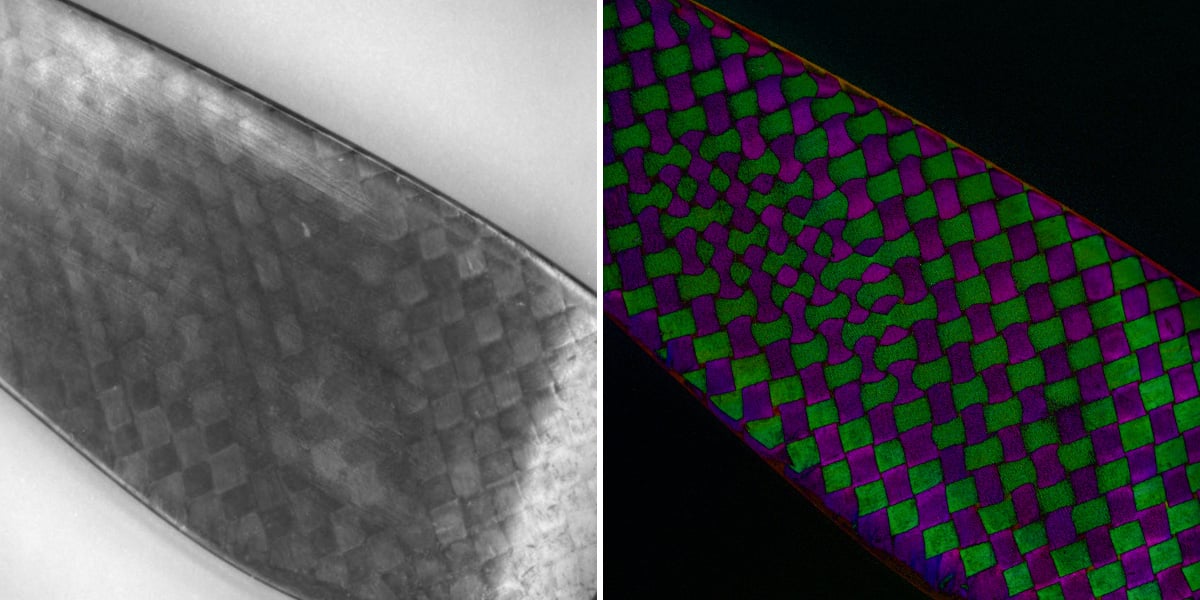
CFRP: Examination of deformations

Glass: Examination of residual stresses
Film: Examining the damages
Imaging with Polarized Light
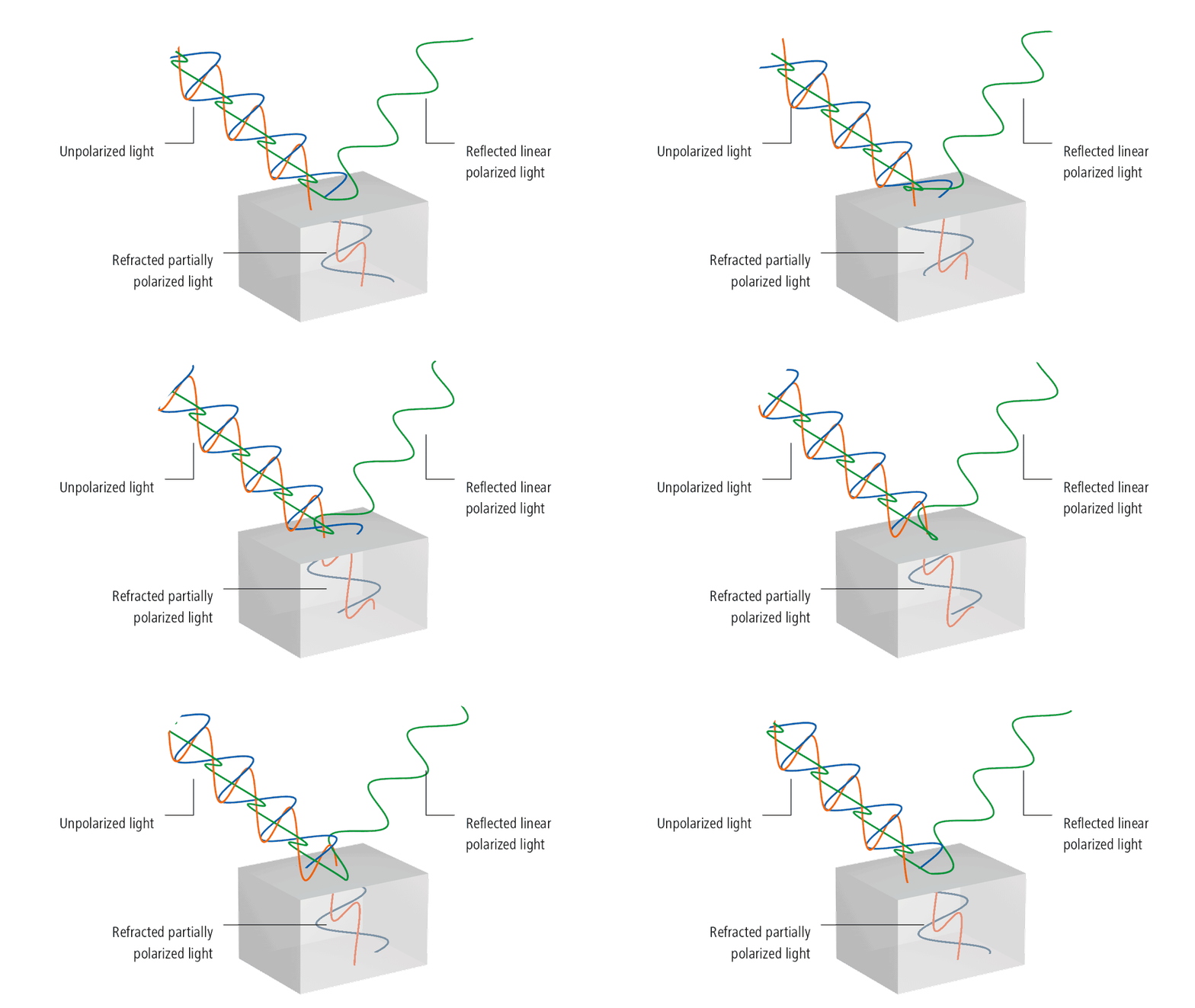
When light is described as an electromagnetic wave, each plane of oscillation can also be called a plane of polarization. In imaging polarization applications, the following types of polarization must be distinguished:
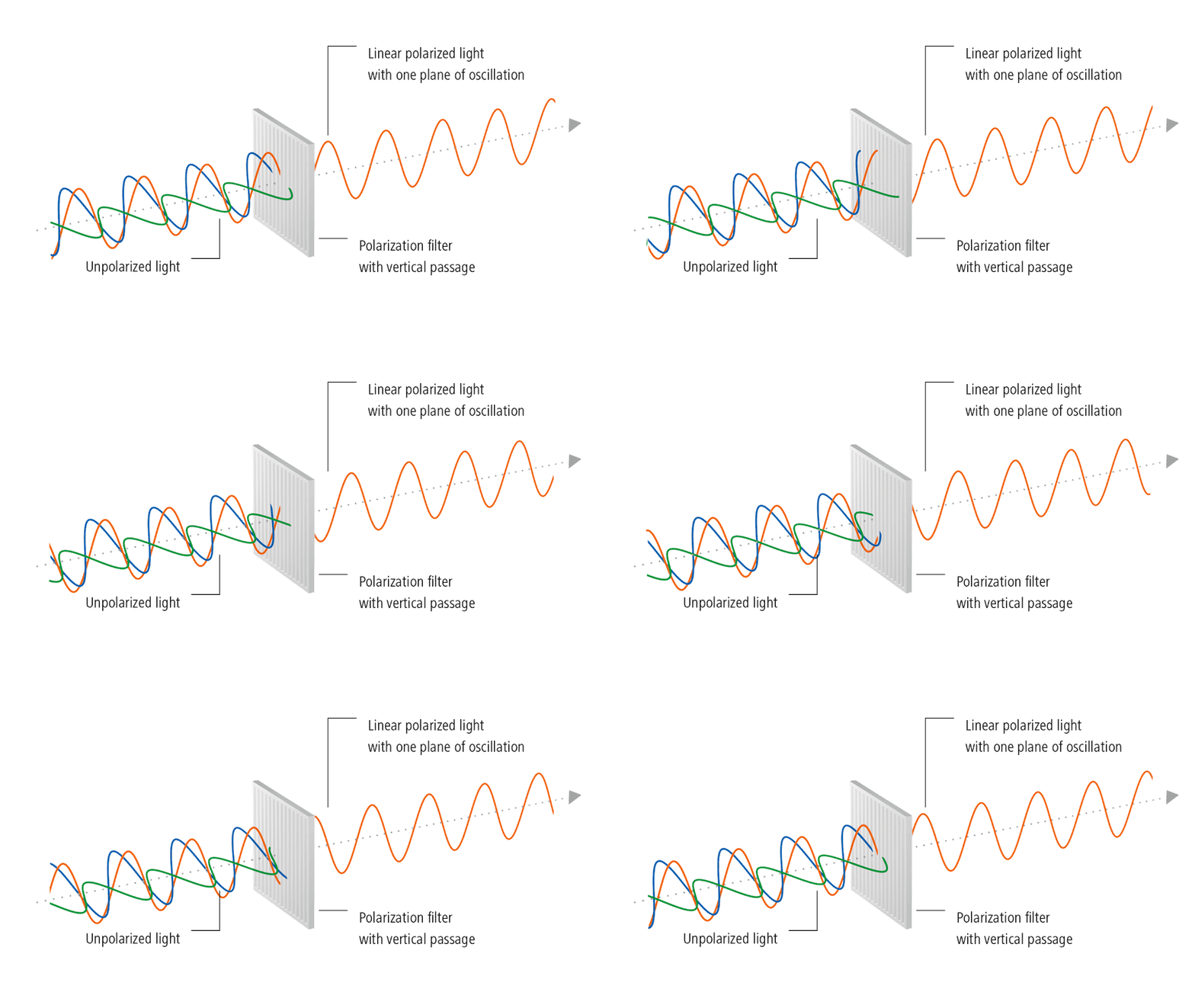
- Unpolarized light consists of many overlapping light waves, such as sunlight, light emitted by electric light bulbs, and most types of LEDs.
- Linearly polarized light is light that has only one plane of oscillation. It is found in many applications and can be easily evaluated by polarization cameras.
- Elliptical and circularly polarized light can occur depending on the amplitude and phase constellation of light waves, for example during the examination of glass, and must be taken into account in system design.
Beyond polarization by reflected and refracted light, illumination achieves linear polarization through polarizing filters. For example, such filters are required for inspections on reflective metal surfaces.
During image acquisition, the polarizing filter suppresses the content of linearly polarized light, preventing reflections and overexposure in parts of the image.
Pixel Level Polarizing Filters
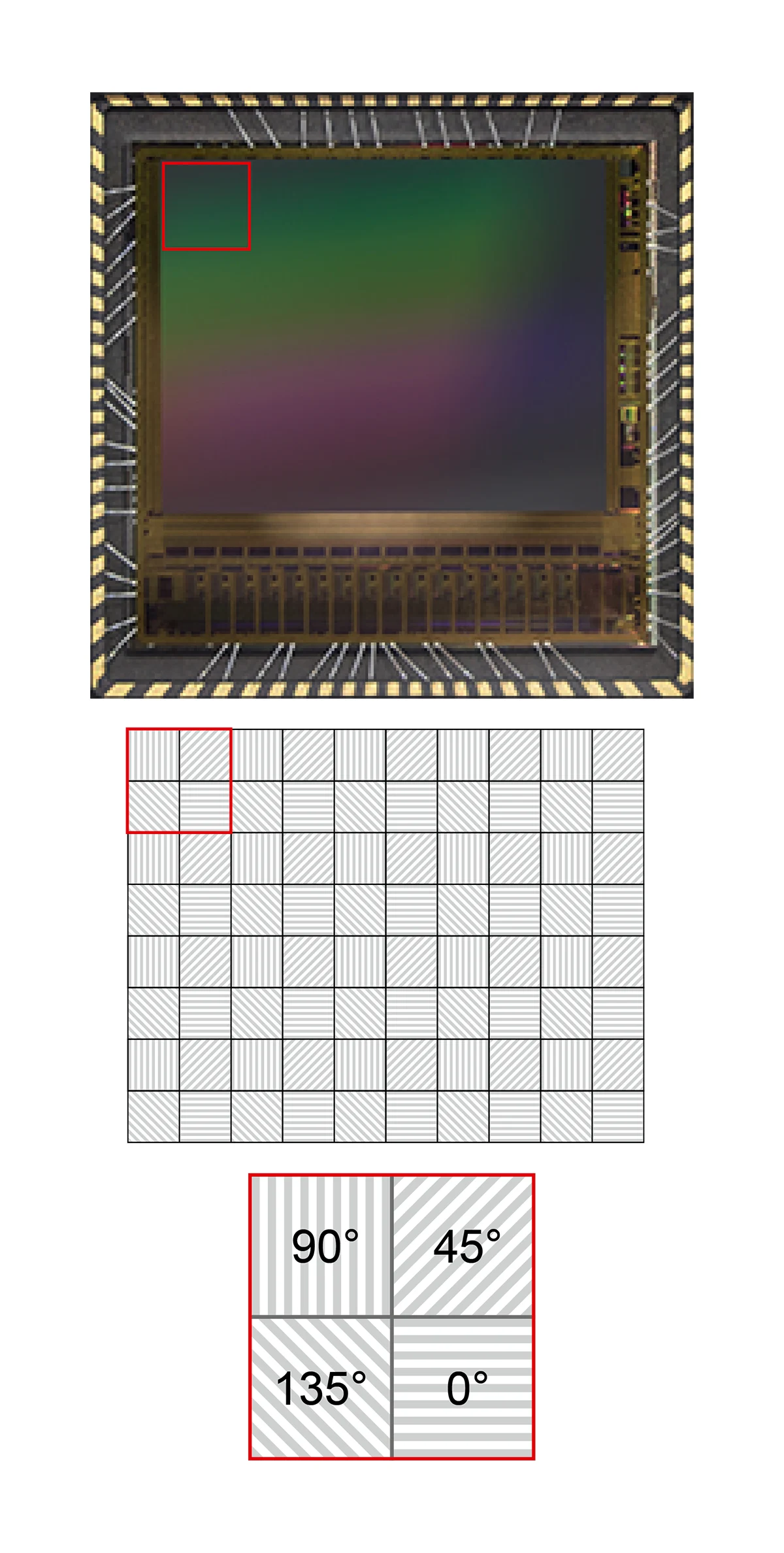
Sony's 5 Megapixel Global Shutter Sensor IMX250MZR integrates four polarizing filters arranged in 2×2 two-pixel blocks on the chip, along with an additional polarization layer. These filters are aligned to the 0°, 45°, 90°, and 135° directions and cover the entire pixel array. Filters are placed under microlenses to prevent incoming light from crossing over to neighboring pixels. Similar to color sensors with a 2×2 Bayer pattern, the angle of polarization (AOP) and degree of polarization (DOLP) of linearly polarized light are interpolated for each pixel based on neighboring pixels.
Unlike traditional solutions that use mechanical filter wheels or several cameras each with individually aligned polarizing filters, the pixel-level polarizing structure offers these key advantages:
- Easy viewing of moving objects thanks to acquisition of all four polarization directions in a single image
- Low system cost thanks to easy integration with a limited number of system components
- Reliable system design with no need for moving parts such as filter wheels
Usage Examples
Packaging of blister packs

Visualization of residual stress
Inspections on product packaging

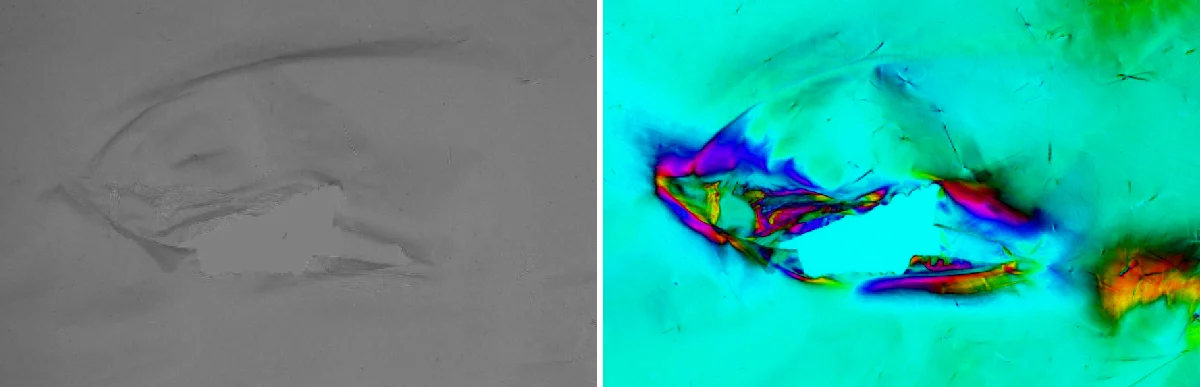
Examination of deformations